
[Solution Library] (a) Let \Theta be a continuous random variable uniformly distributed on [0,2 π] . Let X= cos \Theta and Y= sin \Theta . Show that, for this
Question: (a) Let \(\Theta\) be a continuous random variable uniformly distributed on \([0,2 \pi] .\) Let \(X=\cos \Theta\) and \(Y=\) \(\sin \Theta .\) Show that, for this \(X\) and \(Y\), \(X\) and \(Y\) are uncorrelated but not independent.
(b) Recall that two random variables \(X\) and \(Y\) are jointly Gaussian if they have the joint probability density function:
\[f_{X, Y(x, y)}=\frac{1}{2 \pi \sigma_{X} \sigma_{Y} \sqrt{1-\rho^{2}}} \exp \left(\frac{-1}{2\left(1-\rho^{2}\right)}\left\{\left(\frac{x-\mu_{X}}{\sigma_{X}}\right)^{2}-2 \rho \frac{\left(x-\mu_{X}\right)}{\sigma_{X}} \frac{\left(y-\mu_{Y}\right)}{\sigma_{Y}}+\left(\frac{y-\mu_{Y}}{\sigma_{Y}}\right)^{2}\right\}\right)\]where \(\mu_{X}\) is the mean of \(X, \mu_{Y}\) is the mean of \(Y, \sigma_{X}\) is the standard deviation of \(X, \sigma_{Y}\) is the standard deviation of \(Y\), and \(\rho\) is called the "correlation coefficient". From this monster equation, it is possible to show that:
\[\begin{aligned} &f_{X}(x)=\frac{1}{\sqrt{2 \pi \sigma_{X}^{2}}} \exp \left(-\frac{1}{2}\left(\frac{x-\mu_{X}}{\sigma_{X}}\right)^{2}\right) \\ &f_{Y}(y)=\frac{1}{\sqrt{2 \pi \sigma_{Y}^{2}}} \exp \left(-\frac{1}{2}\left(\frac{y-\mu_{Y}}{\sigma_{Y}}\right)^{2}\right) \end{aligned}\]
If \(X\) and \(Y\) are uncorrelated, then \(\rho=0 .\) Show that \(\rho=0\) implies, for jointly Gaussian \(X\) and \(Y\), that \(X\) and \(Y\) are independent.
Deliverable: Word Document 
![(See) [12 Marks] True, False or Uncertain:](/images/solutions/MC-solution-library-77403.jpg "(See) [12 Marks] True, False or Uncertain: Justify your answer") (See) [12 Marks] True, False or Uncertain: Justify your answer
(See) [12 Marks] True, False or Uncertain: Justify your answer
![[See Solution] [14 Marks] Consider the following](/images/solutions/MC-solution-library-77404.jpg "[See Solution] [14 Marks] Consider the following model: Y=β_1X^β_2exp") [See Solution] [14 Marks] Consider the following model: Y=β_1X^β_2exp
[See Solution] [14 Marks] Consider the following model: Y=β_1X^β_2exp
![(All Steps) [16 Marks] The file](/images/solutions/MC-solution-library-77405.jpg "(All Steps) [16 Marks] The file") (All Steps) [16 Marks] The file "sample_midterm_q3.dat" contains data
(All Steps) [16 Marks] The file "sample_midterm_q3.dat" contains data
![(Steps Shown) [18 Marks] Use the data](/images/solutions/MC-solution-library-77406.jpg "(Steps Shown) [18 Marks] Use the data") (Steps Shown) [18 Marks] Use the data "sample_midterm_q4.dat" to
(Steps Shown) [18 Marks] Use the data "sample_midterm_q4.dat" to
![[Steps Shown] [12 Marks] True, False or](/images/solutions/MC-solution-library-77407.jpg "[Steps Shown] [12 Marks] True, False or Uncertain: Justify your") [Steps Shown] [12 Marks] True, False or Uncertain: Justify your
[Steps Shown] [12 Marks] True, False or Uncertain: Justify your
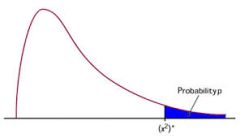 Chi-Square test for One Pop. Variance - MathCracker.com