
(Step-by-Step) [14 Marks] Consider the following model: Y=β_1X^β_2exp (e). As it stands, is this a linear model? If not, what "trick," if any,
Question: [14 Marks]
-
Consider the following model: \(Y={{\beta }_{1}}{{X}^{{{\beta }_{2}}}}\exp \left( e \right)\).
As it stands, is this a linear model? If not, what "trick," if any, can you use to make it a linear regression model? Show your working - Suppose you are interested in estimating the relationship between advertisement expenditure (x) and sales (y): \(y={{\beta }_{1}}+{{\beta }_{2}}x+e\) . Consider the following five observations (in millions):

- Compute \(\sum{\left( {{X}_{i}}-\bar{X} \right)\left( {{Y}_{i}}-\bar{Y} \right)}\), \(\sum{{{\left( {{X}_{i}}-\bar{X} \right)}^{2}}}\) and \(\sum{{{\left( {{Y}_{i}}-\bar{Y} \right)}^{2}}}\).
- If the estimated intercept and slope coefficients are b 1 = -3.10 and b 2 =1.98 respectively, compute the residual series e. Interpret the regression coefficients
- Compute SSE, SSR and SST.
Deliverable: Word Document 
![(All Steps) [16 Marks] The file](/images/solutions/MC-solution-library-77405.jpg "(All Steps) [16 Marks] The file") (All Steps) [16 Marks] The file "sample_midterm_q3.dat" contains data
(All Steps) [16 Marks] The file "sample_midterm_q3.dat" contains data
![(Steps Shown) [18 Marks] Use the data](/images/solutions/MC-solution-library-77406.jpg "(Steps Shown) [18 Marks] Use the data") (Steps Shown) [18 Marks] Use the data "sample_midterm_q4.dat" to
(Steps Shown) [18 Marks] Use the data "sample_midterm_q4.dat" to
![[Steps Shown] [12 Marks] True, False or](/images/solutions/MC-solution-library-77407.jpg "[Steps Shown] [12 Marks] True, False or Uncertain: Justify your") [Steps Shown] [12 Marks] True, False or Uncertain: Justify your
[Steps Shown] [12 Marks] True, False or Uncertain: Justify your
![(Step-by-Step) [10 Marks] Thirty-three students were asked](/images/solutions/MC-solution-library-77408.jpg "(Step-by-Step) [10 Marks] Thirty-three students were asked to rate themselves") (Step-by-Step) [10 Marks] Thirty-three students were asked to rate themselves
(Step-by-Step) [10 Marks] Thirty-three students were asked to rate themselves
![(All Steps) [8 Marks] A psychologist tests](/images/solutions/MC-solution-library-77409.jpg "(All Steps) [8 Marks] A psychologist tests seventh grade students") (All Steps) [8 Marks] A psychologist tests seventh grade students
(All Steps) [8 Marks] A psychologist tests seventh grade students
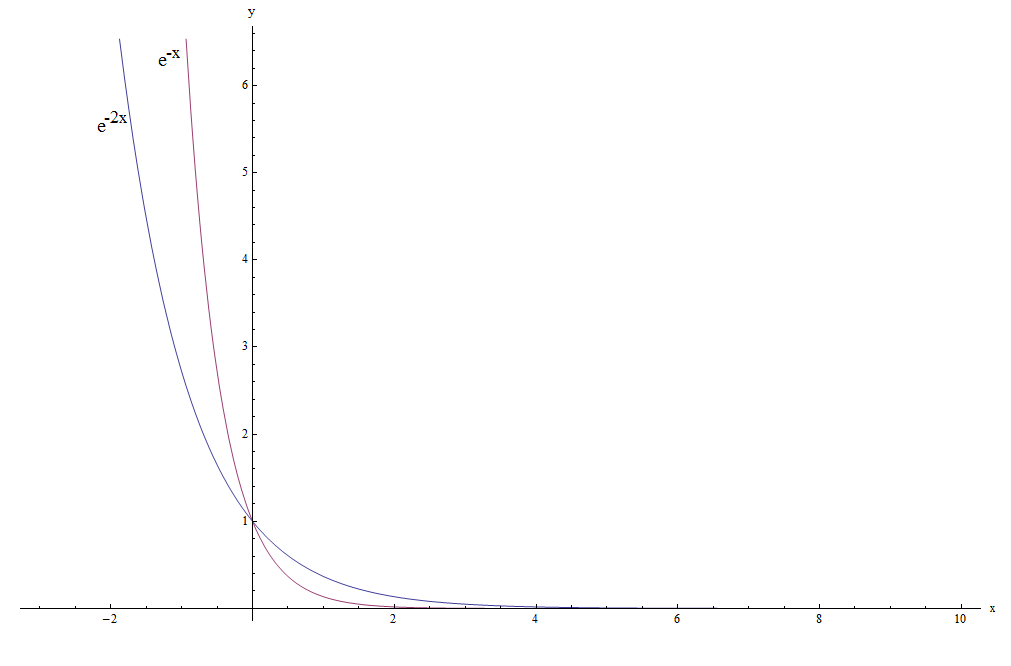 Exponential Function Graph maker - MathCracker.com