LESSON 36 Scenario: Terrill is interested in assessing how much women value their careers. He develops
LESSON 36
Scenario: Terrill is interested in assessing how much women value their careers. He develops a 12 item scale, the Saxon Career Values Scale (SCVS). He has 100 college women take the SCVS. All of the items reflect the value women place on having a career versus having a family. Students are asked to response to each on a 4-pint scale, with 0 indicating "disagree" and 3 indicating "agree". As shown in Table 47:
Variables Definition
Q1 I consider marriage and having a family to be more important than a career.
Q2 To me, marriage and family are as important as having a career.
Q3 I prefer to pursue my career without the distractions of marriage, children, or a household.
Q4 I would rather have a career than a family
Q5 I often think about what type of job I’ll have 10 years from now.
Q6. I could be happy without a career
Q7. I don’t need to have a career to be fulfilled
Q8. I would leave my career to raise my children
Q9. Having a career would interfere with my family responsibilities
Q11. Planning for and succeeding in a career is one of my primary goals.
Q12. I consider myself to be very career-minded
- Conduct a factor analysis. How many factors underlie the SCVS based on the Scree plot?
- How many factors underline the SCVS based on the eigenvalue-greater-than1 criterion?
-
Write a Results section reporting your analyses.
LESSON 37
The data for Exercises 4 through 7 are in the data tile named Lesson 37aerrise File 2 on the Web at http://wwwprenhall.com/greensalkind. The data are based on the following research problem.
Jessica is interested in assessing humor demeaning to others versus self-deprecating humor. She develops a 10-item measure in which some items represent humor demeaning to others (Don Rickles items), while other items reflect self-deprecating humor (Woody Allen items). She administers her measure to 100 college students. Students are asked to respond to each on a 5-point scale with 1 indicating "disagree" and 5 indicating "agree." Jessica computes a total score by reverse-scaling the Woody Allen items and then summing all items. The variables in the data set are shown in Table 51.
Table 51
Items from a Humor Measure
Variables Definition
item01 Like to make fun of others. (Don Rickles)
item02 I make people laugh by making fun of myself. (Woody Allen)
item03 People find me funny when I make jokes about others. (Don Rickles)
item04 I talk about my problems to make people laugh. (Woody Allen)
item05 I frequently make others the target of my jokes. (Don Rickles)
item06 People Find me funny when I tell them about my failings. (Woody Allen)
item07 I love to get people to laugh by using sarcasm.,(Don Rickles)
item08 I am funniest when I talk about my own weaknesses. (Woody Allen)
item09 I make people laugh by exposing other people's stupidities. (Don Rickles)
item10 I am funny when / tell others about the dumb things I have done. (Woody Allen)
4. Compute a. reliability analysis on the total score, using coefficient alpha.
5. Conduct the analysis again, this time computing a split-half reliability. coefficient. Can you justify the method you chose to split the items?
6. Which estimate of reliability is the more appropriate one? Why?
7. Write a Results section based on your analyses.
LESSON 38
The data for Exercises 5 through 9 are in the data file named Lesson 38 Exercise File 2 on the Web at http://www.prenhall.com/greensalkind. The data are based on the following research problem.
Jessica is interested in assessing humor. She develops a 10-item measure in which some items represent humor demeaning to others (Don Rickles items), while other items reflect self-deprecating humor (Woody Allen items). She administers her measure to 100 college students. Students are asked to respond to each on a 5-point scale with 1 indicating "disagree" and 5 indicating "agree." Table 56 shows the variables in the data set.
Table 56
Items from a Humor Measure
Variables Definition
item01 I like to make fun of others. (Don Rickles)
item02 I make people Laugh by making fun of myself. (Woody Allen)
item03 People find me funny when I make jokes about others. (Don Rickles)
item04 I talk about my problems to make people Laugh. (Woody Allen)
item05 I frequently make others the target of my jokes. (Don Rickles)
item06 People find me funny when I tell them about my failings. (Woody Allen)
item07 I love to get people to laugh by using sarcasm. (Don Rickles)
item08 I am funniest when I talk about my own weaknesses. (Woody Allen)
item09 I make people laugh by exposing other people's stupidities. (Don Pickles)
item10 I am funny when I tell others about the dumb things I have done. (Woody Allen)
5. Conduct an item analysis on this scale for a single dimension. (Note: You will want to reverse-scale either the Woody Allen or Don Rickles items, hut not both sets of items.)
6. Conduct the analysis again, this time computing corrected item—total correlations for separate scales: (1) the Don Rickles scale and (2) the Woody Allen scale.
7. Compute correlations between each item and the other scale to assess discriminant validity.
8. Create a table to summarize your item analysis for the Don Rickles and Woody Allen scales,
9. Write a Results section based on your analyses.
Deliverable: Word Document

-
 (See Steps) STATS For Questions 1 2 , use the following R commands
-
(Steps Shown) Case Problem Specialty Toys Specialty Toys, Inc.,
-
(See Solution) Let’s Make a Deal Case A number of years ago, there
-
[Solution] Alternate Test for Variation in Two Samples Question
-
Solution: Data Analysis Plan for the Foster Care Agency Introduction
-
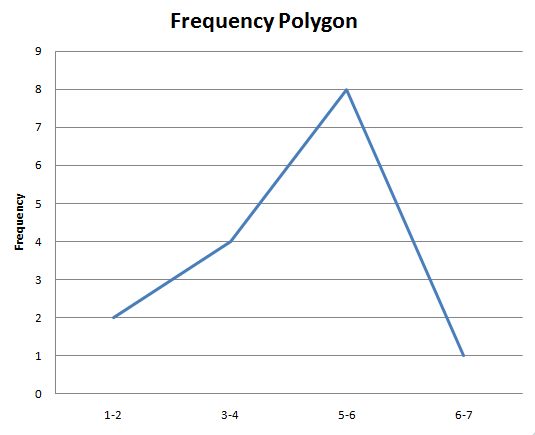
Frequency Polygon Graph Maker - MathCracker.com


![[Solution] Alternate Test for Variation in Two](/images/solutions/MC-solution-library-82061.jpg "[Solution] Alternate Test for Variation in Two Samples Question")