(Answer) 1. Suppose that the firm faces perfectly competitive - #80050
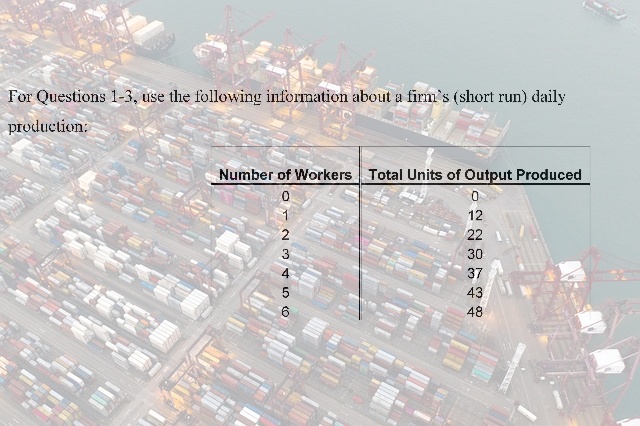
For Questions 1-3, use the following information about a firm’s (short run) daily production:
|
Number of Workers |
Total Units of Output Produced |
|
0 |
0 |
|
1 |
12 |
|
2 |
22 |
|
3 |
30 |
|
4 |
37 |
|
5 |
43 |
|
6 |
48 |
|
7 |
52 |
|
8 |
55 |
|
9 |
57 |
|
10 |
58 |
1. Suppose that the firm faces perfectly competitive input and output markets. The market price for the firm’s output is $20/unit, and the market wage is $120/day. What is the firm’s profit maximizing level of employment? How many units of output does the firm produce? If the firm faces fixed costs of $100/day, what is the firm’s profit (revenue minus total costs)?
2. Now suppose that the firm is a monopolist in the output market, but faces perfectly competitive input markets. We have the following information about daily demand for the firm’s output:
|
Price of Output |
Units of Output Sold |
|
60 |
0 |
|
50 |
12 |
|
41 |
22 |
|
35 |
30 |
|
32 |
37 |
|
30 |
43 |
|
28 |
48 |
|
26 |
52 |
|
24 |
55 |
|
20 |
57 |
|
16 |
58 |
If the market wage is $106/day, what is the monopolist’s profit maximizing level of employment? How many units of output does the firm produce? If the firm faces fixed costs of $150/day, what is the firms’ profit (revenue minus total costs)?
3. Now suppose that the firm is a monopsonist in the labour market, but faces a perfectly competitive output market. We have the following information about the labour supply curve that this firm faces:
|
Daily Wage Paid |
Number of Workers Hired |
|
40 |
0 |
|
50 |
1 |
|
60 |
2 |
|
70 |
3 |
|
80 |
4 |
|
88 |
5 |
|
95 |
6 |
|
102 |
7 |
|
110 |
8 |
|
120 |
9 |
|
130 |
10 |
If the market price for the firm’s output is $20/unit, what is the monopsonist’s profit maximizing level of employment? How many units of output does the firm produce? If the firm faces fixed costs of $80/day, what is the firm’s profit (revenue minus total costs).
4. Suppose that a worker’s alternative wage, W*, is $200 in every period. A firm offers the worker a three-period contract that pays $180 in the first period and $200 in the second period. Assuming that the interest rate (discount rate) is 10%, how much must the firm offer in the third period to attract the worker?
Deliverable: Word Document
 and pdf