Consider the linear system: r x+2 y+z=a , x+y+a z=1 , 3 x+4 y+(a^2-5) z=1 For which value(s) of a does
2. Consider the linear system:
\(\begin{array}{r}
x+2 y+z=a \\
x+y+a z=1 \\
3 x+4 y+\left(a^{2}-5\right) z=1
\end{array}\)
For which value(s) of \(a\) does the system have NO solution?
3. Let \(v \in \mathbb{R}^{n}\) be a nonzero vector. Consider the linear transformation
\(T(x)=(v \cdot x) v\) (a) Describe the kernel of \(T\). When (in terms of \(v\) and \(n\) ) is \(T\) one-to-one?
(b) Describe the image of \(T\). When is \(T\) onto?
4. Suppose \(\mathrm{n}\) is even. Consider \(P_{n}\), the space of polynomials of degree less than or equal to \(n\). For each of the following prove or disprove that the given set is a subspace of \(P_{n}\). If the answer is yes, find a basis of the subspace.
- \(\left\{a_{0}+a_{1} t+\cdots+a t^{n} \mid a_{0}+a_{1}+\cdots+a_{n}<1\right\}\)
- \(\left\{f \in P_{n} \mid f(-x)=-f(x)\right.\) for all \(\left.x\right\}\)
5. Consider the linear transformation \(T: \mathbb{R}^{2 \times 2} \rightarrow \mathbb{R}^{2 \times 2}\)
\(T(M)=\left[\begin{array}{ll}
1 & 1 \\
1 & 1
\end{array}\right] M-M\left[\begin{array}{ll}
1 & 1 \\
1 & 1
\end{array}\right]\)
Write the matrix of \(T\) with respect to the basis
\(\left[\begin{array}{cc}
1 & 1 \\
-1 & -1
\end{array}\right],\left[\begin{array}{ll}
1 & -1 \\
1 & -1
\end{array}\right],\left[\begin{array}{ll}
1 & 0 \\
0 & 1
\end{array}\right],\left[\begin{array}{ll}
0 & 1 \\
1 & 0
\end{array}\right]\)
6. Compute the singular value decomposition of
\(A=\left[\begin{array}{cc}
1 & 0 \\
0 & 2 \\
2 & -1
\end{array}\right]\)
7. Find an orthonormal basis for the space spanned by the three linearly independent vectors
\(\left[\begin{array}{l}
1 \\
0 \\
0 \\
1
\end{array}\right],\left[\begin{array}{c}
1 \\
-1 \\
1 \\
1
\end{array}\right],\left[\begin{array}{c}
1 \\
0 \\
1 \\
-1
\end{array}\right]\)
8. Find all least square solutions of the following system of equations
\(\begin{aligned}
& x+y+2z=4 \\
& 2x+2y+3z=2 \\
& 3x+3y+4z=3 \\
\end{aligned}\)
9. Decide whether the following statement is true or false: If \(A\) is a symmetric \(n \times n\) matrix and there is some positive integer \(k\) so that \(A^{k}=0\) (the zero matrix), then \(A\) must be the zero matrix. Give a full explanation of your answer.
10. Let \(A=\left[\begin{array}{cc}-15 & 28 \\ -8 & 15\end{array}\right]\)
- Find all eigenvalues of \(A\) and compute an eigenvector for each one.
- Find an invertible matrix \(P\) and a diagonal matrix \(D\) such that \(A=P^{-1} D P\)
- Compute \(A^{37}\)
Deliverable: Word Document

-
 (See Solution) (Hint: This pmf should look familiar.) Random variables
-
Solution: Name(s): The portions of the assignment for which you'll
-
(See Steps) Descriptive Analysis State the breakdown of Marital
-
(Step-by-Step) Description : For this final question set, you
-
[Solution Library] Part I Question 1 : Think of this as a "virtual"
-
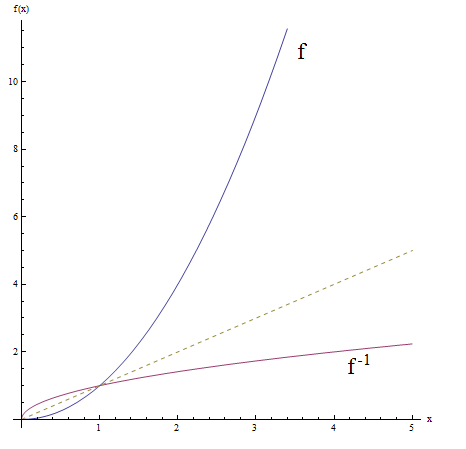
How to Find the Inverse of a Function - MathCracker.com



![[Solution Library] Part I Question 1 :](/images/solutions/MC-solution-library-83013.jpg "[Solution Library] Part I Question 1 : Think of this as a")