
(See Steps) Weekly demand for diskettes at a retailer is normally distributed with a mean of 1,000 boxes and a standard deviation of 150. Currently, the
Question:
Weekly demand for diskettes at a retailer is normally distributed with a mean of 1,000 boxes and a standard deviation of 150. Currently, the store places orders via paper that is faxed to the supplier. Assume 50 working weeks in a year and the following data:
Lead time for delivery of an order is 4 weeks.
Fixed cost (ordering and transportation) per order is $100.
Each bos of diskettes costs $1.
Holding cost is 25% of average inventory value.
The retailer currently orders 20,000 diskettes when stock on hand reaches 4,200.
- Currently how long, on average, does a diskette spend in the store? What is the annual ordering and holding cost under such a policy?
- Assuming that the retailer wants the probability of stocking out in a cycle to be no more than 5%, recommend an optimal inventory policy (a policy regarding order quantity and safety stock). Under your recommended policy, how long, on average, would a box of diskettes spend in the store?
- Claiming that it will lower lead time to 1 week, the supplier is trying to push an EDI system on the retailer. In terms of costs and flow times, what benefits can the retailer expect to realize by adopting the EDI system?
Deliverable: Word Document 
 (Step-by-Step) Johnson Electronics sells electrical and electronic
 (Solution Library) As owner of Catch-of-the-Day Fish Shop, you
 (Solution Library) The JD Power Initial Quality Survey polls more
 (Step-by-Step) We often describe our emotional reaction to social
![[Solution Library] Metabolic rate, the rate at](/images/solutions/MC-solution-library-57418.jpg "[Solution Library] Metabolic rate, the rate at which the body consumes energy,") [Solution Library] Metabolic rate, the rate at which the body consumes energy,
[Solution Library] Metabolic rate, the rate at which the body consumes energy,
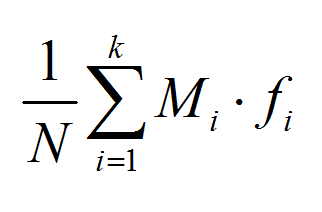 Sample Mean of Grouped Data Calculator - MathCracker.com