
[Step-by-Step] Use your knowledge about price-searching firms and two-part pricing to advise the company below. The company rents cars and has to decide
Question: (15 points) Use your knowledge about price-searching firms and two-part pricing to advise the company below.
The company rents cars and has to decide periodically what its weekly rate and mileage charge (if any) should be. It has done a modest regression study of the behavior of past customers concerning the prices they were willing to pay and the number of miles they drove.
There are two basic kinds of customers, salespeople and tourists. The salespeople typically take short trips around town to visit clients. The tourists may drive around the city, but also drive longer distances to visit outlying areas. For the group of rental offices you are advising, there are typically 200 salespeople and 100 tourists renting cars during a week’s time.
The estimate from the regression study is that a change in the mileage rate of 10 cents per mile causes a typical salesperson to change the number of miles he drives per week by 50 miles. A typical tourist changes the number of miles driven by 80 miles per week for each 10-cent change in the mileage rate. For both groups of customers, no one will rent a car if the mileage rate is $1.50 (150 cents per mile) or higher.
Customers must pay for any gasoline consumed. The marginal cost to the company for miles driven is constant and equal to 50 cents per mile (due to depreciation and maintenance expenses).
One manager at the company has argued that, as with several other car rental companies, no mileage charge should be assessed, but there should be a hefty weekly rate. Others have argued for having a more modest weekly rate combined with a mileage charge.
Using the above information about slopes and the intercept on the vertical axis, draw a demand curve for a typical salesperson and for a typical tourist on the same diagram. Put a mileage charge in cents on the vertical axis and the number of miles driven per week on the horizontal axis. Determine an intercept on the horizontal axis for each curve by asking what the number of miles driven would be for each type of customer if the mileage charge were zero. Write equations for the curves in slope-intercept form. Now draw a separate diagram for an overall demand curve for all of the customers combined during a typical week. You should be able to determine both an intercept for the vertical axis and one for the horizontal axis; for the intercept on the horizontal axis consider a mileage charge of zero. Consider also the number of miles driven by a typical salesperson and by a typical tourist, respectively, and the total number of salespeople and tourists. (You can thus determine what the combined number of miles driven by everyone would be if the mileage charge were zero.) Determine the slope of the overall demand curve, and write an equation for it in slope-intercept form. Round off the slope to 4 decimal places when putting the equation in slope-intercept form.
Recall that, in the case of a straight-line demand curve, the slope of the marginal revenue line for a company that does not practice price discrimination is double the slope of the (total) market demand curve. (Round off the slope to 4 decimal places.) Given the marginal cost facing the company, if there were no weekly rate for renting a car, what mileage charge would maximize profits? Show the result in a diagram where marginal revenue intersects marginal cost, and the best charge is up on the overall demand curve. Also show the result with algebra.
Remember that the best set-up charge for two-part pricing if no price discrimination is feasible is equal to the consumer surplus otherwise available to the weaker demander. Taking the above mileage charge as a given, what would be the highest possible weekly rate that could be assessed without a typical salesperson leaving the market?
Based on the discussion in the last part of Chapter 12 (Browning-Zupan book and slides), the above combination of mileage and weekly charges would NOT be likely to maximize profits. A lower mileage rate and higher weekly rate would yield a better result. Write a profit equation. Profits equal total revenue minus total cost. Total cost equals 50 cents times the total number of miles driven. Total revenue equals the mileage charge (if any) times the number of miles driven, PLUS 300 customers times the weekly rate. The weekly rate equals, for a salesperson, the triangle of consumer surplus above the mileage charge but below the demand curve for a typical salesperson. (The area of a triangle equals one half the base times the height.)
Let P equal the mileage charge. Let Q equal the total number of miles driven. Let q equal the miles driven by a typical salesperson. Early on, use the equation for the overall demand curve and solve it for Q. Also use the equation for the demand curve of a typical salesperson and solve it for q. Then, in the profit equation, substitute in an expression involving P for every Q or q. You will take the derivative of the profit equation with respect to P and set the derivative equal to zero. It will take a while to simplify the equation and solve for P, but it’s doable. Carry through all decimals for this part of the exercise (except for the above-mentioned slopes that were rounded to 4 decimal places). Calculate the best weekly rate as well. Show all your work.
Deliverable: Word Document 
 (Step-by-Step) Meal Outsourcing Mr. Eiríksson was recently hired
![[See Steps] Beta Mining owns a copper](/images/solutions/MC-solution-library-75951.jpg "[See Steps] Beta Mining owns a copper mine. The firm is going") [See Steps] Beta Mining owns a copper mine. The firm is going
[See Steps] Beta Mining owns a copper mine. The firm is going
![[See Solution] Mr. Palsson is an MBA](/images/solutions/MC-solution-library-75952.jpg "[See Solution] Mr. Palsson is an MBA candidate who is considering") [See Solution] Mr. Palsson is an MBA candidate who is considering
[See Solution] Mr. Palsson is an MBA candidate who is considering
![[Solution] a. (Income statement) At the end](/images/solutions/MC-solution-library-75953.jpg "[Solution] a. (Income statement) At the end of its third year") [Solution] a. (Income statement) At the end of its third year
[Solution] a. (Income statement) At the end of its third year
![[Step-by-Step] (Income statement) If the Mayfield Steel](/images/solutions/MC-solution-library-75954.jpg "[Step-by-Step] (Income statement) If the Mayfield Steel Fabrication Company") [Step-by-Step] (Income statement) If the Mayfield Steel Fabrication Company
[Step-by-Step] (Income statement) If the Mayfield Steel Fabrication Company
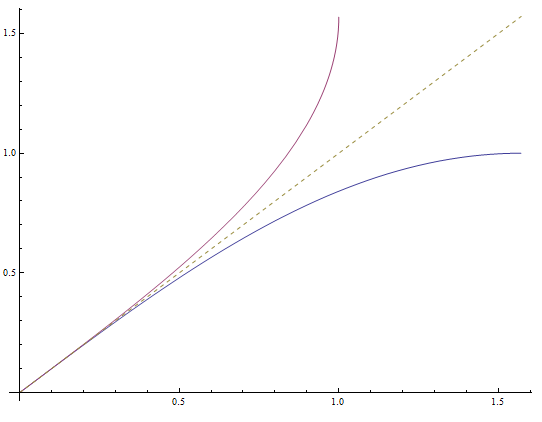 Logarithmic Function Graph maker - MathCracker.com