
(See Steps) Suppose that you are interested in estimating the ceteris paribus relationship between y and x_1 . For this purpose, you can collect data on
Question: Suppose that you are interested in estimating the ceteris paribus relationship between \(y\) and \(x_{1} .\) For this purpose, you can collect data on two control variables, \(x_{2}\) and \(x_{3}\). (For concreteness, you might think of \(y\) as final exam score, \(x_{1}\) as class attendance, \(x_{2}\) as GPA up through the previous semester, and \(x_{3}\) as SAT or ACT score.) Let \(\tilde{\beta}_{1}\) be the simple regression estimate from \(y\) on \(x_{1}\) and let \(\hat{\beta}_{1}\) be the multiple regression estimate from \(y\) on \(x_{1}, x_{2}, x_{3}\).
- If \(x_{1}\) is highly correlated with \(x_{2}\) and \(x_{3}\) in the sample, and \(x_{2}\) and \(x_{3}\) have large partial effects on y, would you expect \(\tilde{\beta}_{1}\) and \(\hat{\beta}_{1}\) to be similar or very different? Explain.
- If \(x_{1}\) is almost uncorrelated with \(x_{2}\) and \(x_{3}\), but \(x_{2}\) and \(x_{3}\) are highly correlated, will \(\tilde{\beta}_{1}\) and \(\hat{\beta}_{1}\) tend to be similar or very different? Explain.
- If \(x_{1}\) is highly correlated with \(x_{2}\) and \(x_{3}\), and \(x_{2}\) and \(x_{3}\) have small partial effects on \(\mathrm{y}\), would you expect \(\operatorname{se}\left(\tilde{\beta}_{1}\right)\) or \(\operatorname{se}\left(\hat{\beta}_{1}\right)\) to be smaller? Explain.
- If \(x_{1}\) is almost uncorrelated with \(x_{2}\) and \(x_{3}, x_{2}\) and \(x_{3}\) have large partial effects on \(\mathrm{y}\), and \(x_{2}\) and \(x_{3}\) are highly correlated, would you expect \(\operatorname{se}\left(\tilde{\beta}_{1}\right)\) or \(\operatorname{se}\left(\hat{\beta}_{1}\right)\) to be smaller? Explain.
Deliverable: Word Document 
![[Solved] The data in WAGE2.RAW on working](/images/solutions/MC-solution-library-37120.jpg "[Solved] The data in WAGE2.RAW on working men was used to estimate") [Solved] The data in WAGE2.RAW on working men was used to estimate
[Solved] The data in WAGE2.RAW on working men was used to estimate
 (Steps Shown) Consider the multiple regression model containing
 (See Solution) Suppose that at a large university. college grade point
![[Solution Library] Use the data in WAGE2.RAW](/images/solutions/MC-solution-library-37123.jpg "[Solution Library] Use the data in WAGE2.RAW to estimate a simple") [Solution Library] Use the data in WAGE2.RAW to estimate a simple
[Solution Library] Use the data in WAGE2.RAW to estimate a simple
![[All Steps] We used the data in](/images/solutions/MC-solution-library-37124.jpg "[All Steps] We used the data in MEAP93.RAW for Example 2.12. Now") [All Steps] We used the data in MEAP93.RAW for Example 2.12. Now
[All Steps] We used the data in MEAP93.RAW for Example 2.12. Now
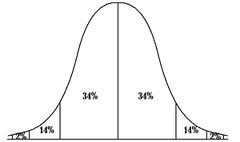 Sampling Distribution of the Sample Proportion Calculator - MathCracker.com