
(See Solution) Show that W[J_nu, J_-\nu](x)=C/x for any positive number \nu and x>0, where W is the Wronskian function. Hint: First prove the following identity,
Question: Show that
\[W\left[J_{\nu}, J_{-\nu}\right](x)=\frac{C}{x}\]for any positive number \(\nu\) and \(x>0\), where \(W\) is the Wronskian function. Hint: First prove the following identity, which states that if \(f\) and \(g\) are solutions of
\[y^{\prime \prime}+p(x) y^{\prime}+q(x) y(x)=0\]then \(W[f, g](x)=C e^{-\int p(x) d x}\). Idea: Write down two d.e.'s, one for \(f\) and the same one for \(g\). Write down the definition of \(W[f, g](x)=C e^{-\int p(x) d x}\) and differentiate it. By simplifying, you will get a first order d.e. just for \(W\) which you can easily integrate. Finally, once you have established the result, use it to prove what is required above.
- Do problem 14 from section 5.3 of the reader.
- Using the result from (a), prove that \(\sum_{n=0}^{\infty} \frac{1}{2^{n+1}} P_{n}\left(\frac{1}{2}\right)=\frac{1}{\sqrt{3}}\).
- Prove that \(P_{n}(x)\) has no repeated roots. Hint: suppose \(P_{n}(x)\) has a repeated root at \(x_{0}\), then \(P_{n}\left(x_{0}\right)=P_{n}^{\prime}\left(x_{0}\right)\) (why? explain.). Thus \(P_{n}(x)\) is a solution of the initial value problem \(\left(1-x^{2}\right) y^{\prime \prime}-2 x y^{\prime}+\) \(n(n+1) y=0 ; \quad y\left(x_{0}\right)=0, \quad y^{\prime}\left(x_{0}\right)=0\). Continue by using the uniqueness theorem for solutions of linear initial value problems.
Deliverable: Word Document 
 (Solution Library) Use the given change of variables to transform
![[See Solution] Determine whether the following boundary-value](/images/solutions/MC-solution-library-65847.jpg "[See Solution] Determine whether the following boundary-value problem") [See Solution] Determine whether the following boundary-value problem
[See Solution] Determine whether the following boundary-value problem
 (Solution Library) In this problem, we outline a proof of the first part
 (See Steps) Consider the Sturm-Liouville problem -[ p(x)y^prime
 (All Steps) Suppose a professor gave an 8-point quiz to a small class
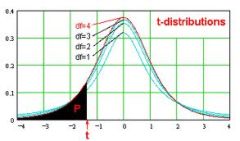 T-test for Paired Samples - MathCracker.com