
(All Steps) (30 points total; 10 points each part) A data file, student survey , available on Blackboard, consists of responses of graduate students in the
Question: (30 points total; 10 points each part)
A data file, student survey , available on Blackboard, consists of responses of graduate students in the social sciences enrolled in a statistics course at the University of Florida. The headings at the top of the file refer to the following variables:
- ge = gender
- ag = age in years
- hi = high school GPA (on a four-point scale)
- co = college GPA
- dh = distance (in miles) of the campus from your home town
- dr = distance (in miles) of the classroom from your current residence
- tv = average number of hours per week that you watch TV
- sp = average number of hours per week that you participate in sports or have other physical exercise
- ne = number of times a week you read a newspaper
- ah = number of people you know who have died from AIDS or who are HIV-positive
- ve = whether you are a vegetarian (yes, no)
- pa = political affiliation (D = Democrat, R = Republican, I = independent)
- pi = political ideology (1 = very liberal, 2 = liberal, 3 = slightly liberal, 4 = moderate, 5 = slightly conservative, 6 = conservative, 7 = very conservative)
- re = how often you attend religious services (never, occasionally, most weeks, every week)
- ab = opinion about whether abortion should be legal in the first three months of pregnancy (yes, no)
- aa = support affirmative action (yes, no, uncertain)
- ld = belief in life after death (yes, no, uncertain)
(a) Do students tend to have higher grade point averages in college than they did in high school? Explain how you arrived at your conclusion, and indicate what evidence you used to determine whether any necessary assumptions might be violated.
(b) Is there evidence of a linear relationship between high school grade point average and college grade point average? Explain carefully how you arrived at your conclusion, making full use of available information provided by the output. Indicate any evidence you may see in the scatterplot of potential problems in assessing whether there is a linear relationship between these two variables, and, if so, how those problems might make it difficult to determine the actual relationship between the two variables. Do you think the correlation and regression results show that this linear relationship is "strong," and why?
(c) What relationship, if any, exists between attitudes regarding abortion and support for affirmative action? In your answer, be sure to show what null and alternate hypotheses are used and explain in detail how the test statistic is calculated to test the null hypothesis. Discuss any possible difficulties in interpreting this test result, and how you might go about resolving any such difficulties. Also, use the cell values in the crosstabulation table to explain the extent to which the conclusion from the hypothesis test appears to be supported by the bivariate distribution of the sample data.
Deliverable: Word Document 
![[Solved] (30 points total; 10 points each](/images/solutions/MC-solution-library-72478.jpg "[Solved] (30 points total; 10 points each part) A recent story") [Solved] (30 points total; 10 points each part) A recent story
[Solved] (30 points total; 10 points each part) A recent story
![[Steps Shown] A basketball player makes a](/images/solutions/MC-solution-library-72479.jpg "[Steps Shown] A basketball player makes a foul shot 80% of the") [Steps Shown] A basketball player makes a foul shot 80% of the
[Steps Shown] A basketball player makes a foul shot 80% of the
 (Step-by-Step) A high jumper, John "Hoppin" Hermann, completes
![[Steps Shown] Your company makes an uber-bouncy-tennis](/images/solutions/MC-solution-library-72481.jpg "[Steps Shown] Your company makes an uber-bouncy-tennis ball for professional") [Steps Shown] Your company makes an uber-bouncy-tennis ball for professional
[Steps Shown] Your company makes an uber-bouncy-tennis ball for professional
 Solution: Vermont invests about $4.5 million/year in anti-smoking
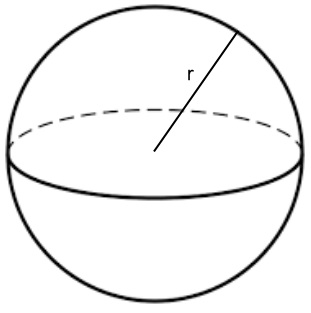 Calculator of the Area and Volume of a sphere - MathCracker.com