
(See Solution) With a perfectly balanced roulette wheel, in the long run, red numbers should turn up 18 times in 38. A casino suspects that red comes up on one
Question:
With a perfectly balanced roulette wheel, in the long run, red numbers should turn up 18 times in 38. A casino suspects that red comes up on one of its roulette wheels too often. To test this hypothesis, it records the results of 3,800 plays on that wheel, finding 1,890 red numbers. Is that too many reds? Or chance variation?
- The casino uses the data to perform a z-test (a hypothesis test using a z-statistic). What are the null and alternative hypotheses?
- Formulate a box model for the casino’s test under the null hypothesis. What are the contents of the box (what are the tickets and how many are there of each type)? How many draws are made, and are they with or without replacement?
- Assuming the null hypothesis is correct, what is the SE for the number of reds?
- What are the z-score and p -value for the casino’s data?
- What should the casino conclude from this test?
Deliverable: Word Document 
 (All Steps) One large course has 900 students, broken down into section
 (Step-by-Step) Does the distribution of inpatient complications
![[See Solution] What were the name and](/images/solutions/MC-solution-library-77999.jpg "[See Solution] What were the name and type of measurement method") [See Solution] What were the name and type of measurement method
[See Solution] What were the name and type of measurement method
 (See Steps) What demographic variables were measured at the nominal
![[Solved] (a) Calculate the mean, median, mode,](/images/solutions/MC-solution-library-78001.jpg "[Solved] (a) Calculate the mean, median, mode, range, and standard") [Solved] (a) Calculate the mean, median, mode, range, and standard
[Solved] (a) Calculate the mean, median, mode, range, and standard
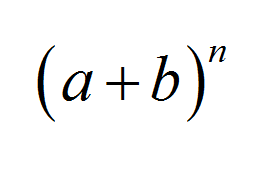 The Binomial Theorem - MathCracker.com