
[Step-by-Step] When a pair of dice is rolled, the total will range from 2 (1,1) to 12 (6,6). It is a fact that some numbers will occur more frequently than
Question: When a pair of dice is rolled, the total will range from 2 (1,1) to 12 (6,6). It is a fact that some numbers will occur more frequently than others as the dice are rolled over and over.
- Why will some numbers come up more frequently than others?
- Each die has six sides numbered from 1 to 6. How many possible ways can a number be rolled? In other words, we can roll (2,3) or (3,2) or (6,1) and so on. What are the total (x,y) outcomes that can occur?
- How might you then estimate the percentage of the time a particular number will come up if the dice are rolled over and over?
- Once these percentages have been calculated, how might the mean value of the all the numbers thrown be determined?
- If you have completed the Discussion Board assignment, you have an idea of what a population distribution is. There is a very famous distribution that describes the frequency of the number of times a number comes up in a series of dice rolls. Use the Library or the Internet to see if you can find its name.
Deliverable: Word Document 
![[See Steps] In this Unit, you studied](/images/solutions/MC-solution-library-37353.jpg "[See Steps] In this Unit, you studied several measures of central") [See Steps] In this Unit, you studied several measures of central
[See Steps] In this Unit, you studied several measures of central
![[All Steps] Assume that you have two](/images/solutions/MC-solution-library-37354.jpg "[All Steps] Assume that you have two numbers, one the numbers") [All Steps] Assume that you have two numbers, one the numbers
[All Steps] Assume that you have two numbers, one the numbers
 [Solution] Conduct the following algebraic operation:
 (Solved) Conduct the following algebraic operation: (1-(4)/(x^2))÷
 (Solution Library) Solve the following equation:
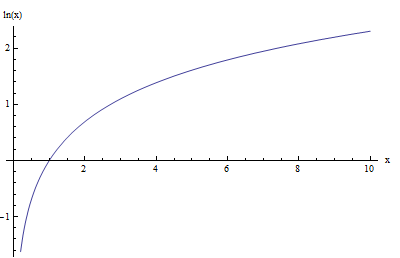 Easy Way of Solving Logarithmic Equations - MathCracker.com