
[See Solution] We also have Newton's Method. Let's say that we wish to solve the equations cos (x-y)=y , sin (x+y)=x , This is hard. But the whole point
Question: We also have Newton's Method. Let's say that we wish to solve the equations
\[\begin{aligned} & \cos (x-y)=y \\ & \sin (x+y)=x \\ \end{aligned}\]
This is hard. But the whole point of calculus is to convert hard problems to easy problems and then solve them. Solving linear equations is easy. So let's pretend these are linear equations. Starting with an initial guess of \((1,1)\) (that is the hard part), approximate our functions \(f(x, y)=\cos (x-y)-y\) and \(g(x, y)=\sin (x+y)-x\) linearly about the point \((1,1)\). Solve the resulting equations for \(x\) and \(y\). Use the new point as the point of linearization and repeat. Do this a few times. What do you find? How well are the equations satisfied?
Deliverable: Word Document 
![[Solved] Evaluate the integral ∫_0^2(arctan (π x)-](/images/solutions/MC-solution-library-66143.jpg "[Solved] Evaluate the integral ∫_0^2(arctan (π x)- arctan") [Solved] Evaluate the integral ∫_0^2(arctan (π x)- arctan
[Solved] Evaluate the integral ∫_0^2(arctan (π x)- arctan
![[Steps Shown] Over what region R in](/images/solutions/MC-solution-library-66144.jpg "[Steps Shown] Over what region R in the x-y does ∫_R(4-x^2-2") [Steps Shown] Over what region R in the x-y does ∫_R(4-x^2-2
[Steps Shown] Over what region R in the x-y does ∫_R(4-x^2-2
 (Steps Shown) Find the area of the region that lies inside the
 (Solution Library) Two points are selected randomly on a line of
 (All Steps) The following equation was estimated as the demand
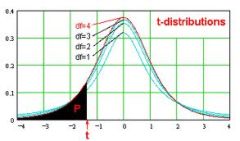 T-Distribution Probability Calculator - MathCracker.com