
(All Steps) You may recall that on January 28, 1986, the space shuttle Challenger exploded moments after takeoff, killing all on board, due to an O-ring
Question: You may recall that on January 28, 1986, the space shuttle Challenger exploded moments after takeoff, killing all on board, due to an O-ring failure that caused fuel to leak and ignite. The temperature at the Kennedy Space Center that morning was 31º F (-0.5º C). Before the launch, some scientists expressed concern that the low temperature might cause hardening and failure of the O-rings. Other scientists refuted this, based on the data in the file C hallenger1.xls x , which records the temperature at the launch site and the number of failures for flights that had an O-ring failure.
- On the basis of the data in the file C hallenger1.xls x , which group of scientists was right? Is there a relationship between number of O-ring failures and temperature?
- A post-crash follow-up commission collected data for temperature and number of O-ring failures on all 24 of the successful pre-Challenger flights, contained in the file C hallenger2.xls x . Use this data to establish whether there is a relationship between O-ring failure and temperature.
Deliverable: Word Document 
 (Step-by-Step) Several years ago, Coca-Cola changed the 100-year old
![[Solution] A few years ago, the manager](/images/solutions/MC-solution-library-68235.jpg "[Solution] A few years ago, the manager of a large French resort-hotel") [Solution] A few years ago, the manager of a large French resort-hotel
[Solution] A few years ago, the manager of a large French resort-hotel
 (All Steps) Swimming pool maintenance is expensive because of the
 (Steps Shown) I often hear debates about which characteristics
 (See Solution) Ellen Sarne has collected the following data on
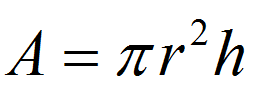 How to Deal With Literal Equations? - MathCracker.com