
(Solution Library) Jack Sparrow owns a treasure W 0 whose value is 5,000 gold coins. The treasure can get damaged for 2500 gold coins (that is, the damage D is equal
Question:
Jack Sparrow owns a treasure W 0 whose value is 5,000 gold coins. The treasure can get damaged for 2500 gold coins (that is, the damage D is equal to 2, 500 gold coins). He chooses to buy an insurance against this damage. Jack Sparrow can purchase this insurance at the price \(\delta \) = 0.1 per gold coin insured. Hence, for full insurance, the insurance company requires Jack to pay 250 gold coins.
- Assume that Jack Sparrow is risk neutral. Write a utility function that represents Jack’s utility as a function of his wealth, W.
- Write the expected utility of Jack Sparrow as a function of the amount \(\alpha \) of insurance chosen and the probability p of the damage.
- Calculate the value of the probability p of the negative event that makes the choice of partial insurance the optimal one, knowing that the insurance premium paid by Jack Sparrow to the insurance company is equal to 125 gold coins.
- Is the insurance offered by the insurance company fair? Explain why.
- After the return of Davy Jones, Jack Sparrow becomes more cautious. Assume that Jack Sparrow is now risk averse and his utility function is u(W) = log(W), where W is his wealth. Calculate the value of the probability p \(\in \) [0, 1] of the negative event such that the choice of partial insurance is the optimal one.
- Is the insurance offered by the insurance company fair in this case? Explain why.
- Compare the results you have obtained when Jack Sparrow is risk neutral and when he is risk averse. Discuss your findings.
Deliverable: Word Document 
 (See Solution) Complete the following table in Excel Q Total Cost
![[Step-by-Step] Complete the following production function table](/images/solutions/MC-solution-library-76700.jpg "[Step-by-Step] Complete the following production function table") [Step-by-Step] Complete the following production function table
[Step-by-Step] Complete the following production function table
![[Solution Library] Assuming the above charts are](/images/solutions/MC-solution-library-76701.jpg "[Solution Library] Assuming the above charts are for the short-run,") [Solution Library] Assuming the above charts are for the short-run,
[Solution Library] Assuming the above charts are for the short-run,
![[Solved] Suppose a firm is using 25](/images/solutions/MC-solution-library-76702.jpg "[Solved] Suppose a firm is using 25 workers and 10 units of capital.") [Solved] Suppose a firm is using 25 workers and 10 units of capital.
[Solved] Suppose a firm is using 25 workers and 10 units of capital.
![[See Solution] What is the MRTS, long-run](/images/solutions/MC-solution-library-76703.jpg "[See Solution] What is the MRTS, long-run total cost, and long-run") [See Solution] What is the MRTS, long-run total cost, and long-run
[See Solution] What is the MRTS, long-run total cost, and long-run
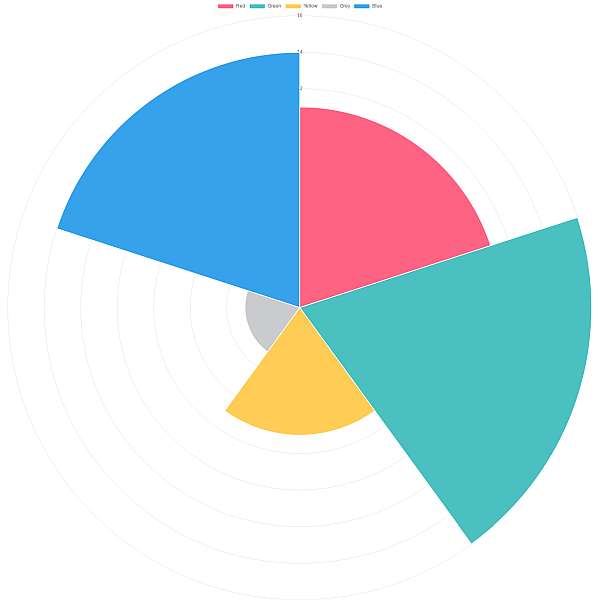 Polar Plot Maker - MathCracker.com