
[All Steps] An intervention to reduce asthma-related emergency department visits was implemented in a primary care practice. The intervention consisted
Question: An intervention to reduce asthma-related emergency department visits was implemented in a primary care practice. The intervention consisted of three treatment groups: 1.) standard medical treatment, 2.) standard medical treatment + parent/patient education, 3.) standard medical treatment + education + home visit for asthma triggers. A total over 300 children were enrolled, 100 in each treatment arm. The results are below.
Use the data below to answer the following questions.
| Treatment 1 | Treatment 2 | Treatment 3 | |
| Total treatment costs | $ 3,000 / year | $ 4,300 / year | $18,000 |
| Percent avoiding emergency room | 79.2% | 81.4% | 88.1% |
- What are the incremental cost-effectiveness ratios comparing each treatment option?
- Assuming the perspective of an insurance company, and the willingness to pay for the intervention is $20,000 for each 1 percent reduction in emergency department visits, what is the recommended treatment?
- In what ways could the other treatment options become more cost-effective? (HINT: this applies to any treatment).
- Suppose the research team compared costs/savings associated with the intervention rather than emergency department rates. What type of cost-effectiveness study would this be?
Deliverable: Word Document 
![[Solution] EFN: The most recent financial statements](/images/solutions/MC-solution-library-75490.jpg "[Solution] EFN: The most recent financial statements for Martin,") [Solution] EFN: The most recent financial statements for Martin,
[Solution] EFN: The most recent financial statements for Martin,
![[Step-by-Step] Challenge: External Funds Needed The Optical](/images/solutions/MC-solution-library-75491.jpg "[Step-by-Step] Challenge: External Funds Needed The Optical Scam") [Step-by-Step] Challenge: External Funds Needed The Optical Scam
[Step-by-Step] Challenge: External Funds Needed The Optical Scam
![[All Steps] Four participants were exposed to](/images/solutions/MC-solution-library-75492.jpg "[All Steps] Four participants were exposed to target syllables in familiar") [All Steps] Four participants were exposed to target syllables in familiar
[All Steps] Four participants were exposed to target syllables in familiar
![[See Steps] Researchers sought to assess the](/images/solutions/MC-solution-library-75493.jpg "[See Steps] Researchers sought to assess the effect of various") [See Steps] Researchers sought to assess the effect of various
[See Steps] Researchers sought to assess the effect of various
![[See Solution] Researchers want to test whether](/images/solutions/MC-solution-library-75494.jpg "[See Solution] Researchers want to test whether there is evidence") [See Solution] Researchers want to test whether there is evidence
[See Solution] Researchers want to test whether there is evidence
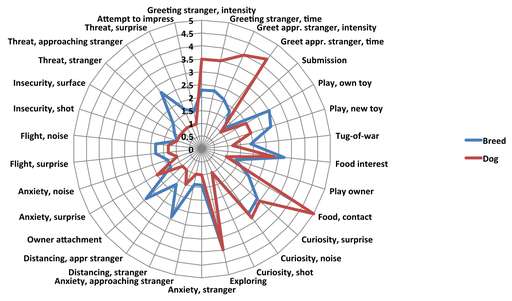 Radar Chart Maker - MathCracker.com