
(Steps Shown) Indicate whether each statement is true or false. If it is false, correct the statement to be true. The prevalence of a disease has no impact
Question: Indicate whether each statement is true or false. If it is false, correct the statement to be true.
- The prevalence of a disease has no impact on the positive predictive value of a screening test.
- Using statistical distributions to arbitrarily categorize health data is acceptable when no other alternatives exist, such as evidence-based thresholds.
- A highly sensitive screening/diagnostic test will result in identifying more true cases of the disease it is testing for than a test with low sensitivity.
- The statement, "heart disease is the leading cause of death in the United States, with an age-adjusted death rate of 169.8 per 100,000 population in 2013" is an example of a relative measure of disease risk.
- A risk factor is a modifiable characteristic of an individual that causes disease.
- Hill’s consideration for causation known as temporality means that the exposure has a dose-response relationship with the disease.
- Community health needs assessments consist of the following steps: developing a shared vision, determining what your organization wants to learn about the community, determining the target population, collecting data, selecting priorities, documenting and communicating results, and implementing an improvement plan.
- An odds ratio will always be the same as a relative risk.
Deliverable: Word Document 
 (Solved) A health system is collecting data regarding comorbidities
 (Solution Library) The following table shows data taken from a random
 (Steps Shown) A private school promoted itself by advertising
![[See Solution] Given the acceleration function with](/images/solutions/MC-solution-library-75827.jpg "[See Solution] Given the acceleration function with the initial") [See Solution] Given the acceleration function with the initial
[See Solution] Given the acceleration function with the initial
 (Solution Library) A vehicle travels at 66 ft / sec when operating its
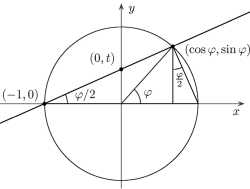 Double Angle Formula - MathCracker.com