
[Solved] Hollar and Moore (2004) used data from the National Education Longitudinal Study 1988-2000 (NELS: 88) to investigate if adolescents with disabilities
Question: Hollar and Moore (2004) used data from the National Education Longitudinal Study 1988-2000 (NELS: 88) to investigate if adolescents with disabilities who use drugs (cigarettes, marijuana, alcohol, cocaine) have worse educational and social outcomes than adolescents with disabilities who do not use drugs. Students were defined as having a disability during 8 th grade if their parents identified them as having at least one disability (physical, emotional, health, or learning) and if they had ever been enrolled in a special education program. The analysis used data on 1021 students with a disability in 8 th grade who had data for all five waves of the survey (i.e., who entered the study in 1988 and did not drop out). Drug use was determined from the 1992 survey (12 th grade) and outcome variables were derived from the 1992, 1994 and 2000 surveys. Here we consider the results for daily cigarette use which are summarized in Table 1 (see next page).
Reference
Hollar, D. and Moore, D. (2004). Relationship of substance use by students with disabilities to long-term educational, employment and social outcomes. Substance Use and Misuse 39, 931-962.

Obtain an approximate 95% confidence interval for the difference in the rate of college attendance between daily cigarette users and nonusers.
Deliverable: Word Document 
 (Solution Library) A study of the pay of corporate chief executive
 (All Steps) A group of 20 women participated in a weight loss
![[See Solution] A group of 20 women](/images/solutions/MC-solution-library-50466.jpg "[See Solution] A group of 20 women participated in a weight loss") [See Solution] A group of 20 women participated in a weight loss
[See Solution] A group of 20 women participated in a weight loss
 (Step-by-Step) Suppose that you purchased (randomly select) 3 laptops
![[See Solution] In a clinical trial of](/images/solutions/MC-solution-library-50468.jpg "[See Solution] In a clinical trial of Lipitor, a common drug used") [See Solution] In a clinical trial of Lipitor, a common drug used
[See Solution] In a clinical trial of Lipitor, a common drug used
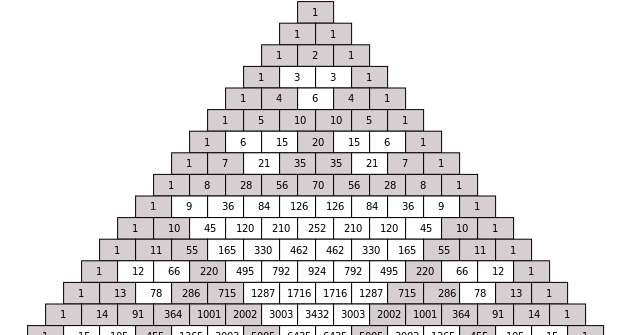 Binomial Expansion Calculator - MathCracker.com