
[Solution Library] The function f has a derivative everywhere and has just one critical point, at x=3. In parts (a)-(d), you are given additional conditions.
Question: The function \(f\) has a derivative everywhere and has just one critical point, at \(x=3\). In parts (a)-(d), you are given additional conditions. In each case decide whether \(x=3\) is a local maximum, a local minimum, or neither. Explain your reasoning. Sketch possible graphs for all four cases.
- \(f^{\prime}(1)=3\) and \(f^{\prime}(5)=-1\)
- \(f(x) \rightarrow \infty\) as \(x \rightarrow \infty\) and as \(x \rightarrow-\infty\)
- \(f(1)=1, f(2)=2, f(4)=4, f(5)=5\)
- \(f^{\prime}(2)=-1, f(3)=1, f(x) \rightarrow 3\) as \(x \rightarrow \infty\)
Deliverable: Word Document 
![[Solution] An apple tree produces, on average,](/images/solutions/MC-solution-library-46925.jpg "[Solution] An apple tree produces, on average, 400 kg of fruit each") [Solution] An apple tree produces, on average, 400 kg of fruit each
[Solution] An apple tree produces, on average, 400 kg of fruit each
 (Solution Library) Businesses are always looking at ways to improve
 Solution: A stone is thrown vertically upwards so that its height,
![[Steps Shown] Given the curve y =](/images/solutions/MC-solution-library-46928.jpg "[Steps Shown] Given the curve y = ax 3 + bx 2 + cx + d, a ≥") [Steps Shown] Given the curve y = ax 3 + bx 2 + cx + d, a ≥
[Steps Shown] Given the curve y = ax 3 + bx 2 + cx + d, a ≥
![[All Steps] The cost of producing q](/images/solutions/MC-solution-library-46929.jpg "[All Steps] The cost of producing q items is C(q) = 1000 + 7q dollars.") [All Steps] The cost of producing q items is C(q) = 1000 + 7q dollars.
[All Steps] The cost of producing q items is C(q) = 1000 + 7q dollars.
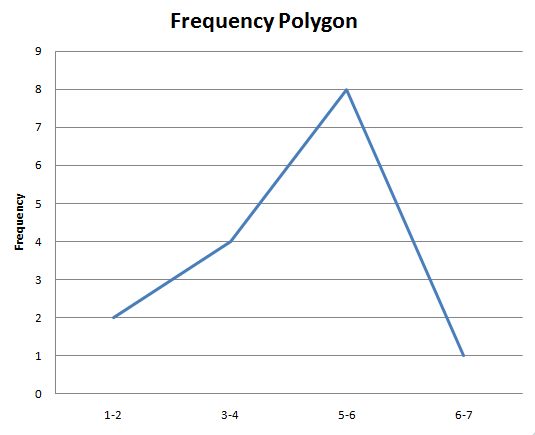 Frequency Polygon Graph Maker - MathCracker.com