
[Steps Shown] A firm has two factories, for which costs are given by: Factory 1:C_1(Q_1)=10Q_1^2 , Factory 2:C_2(Q_2)=20Q_2^2 , The firm faces the following demand
Question: A firm has two factories, for which costs are given by:
\[\begin{aligned} & \text{Factory 1}:{{C}_{1}}({{Q}_{1}})=10Q_{1}^{2} \\ & \text{Factory 2}:{{C}_{2}}\left( {{Q}_{2}} \right)=20Q_{2}^{2} \\ \end{aligned}\]
The firm faces the following demand curve:
\[P=700-5 Q\]where \(Q\) is total output-i.e., \(Q=Q_{1}+Q_{2}\).
- On a diagram, draw the marginal cost curves for the two factories, the average and marginal revenue curves, and the total marginal cost curve (i.e., the marginal cost of producing \(Q=Q_{1}+Q_{2}\) ). Indicate the profit-maximizing output for each factory, total output, and price.
- Calculate the values of \(Q_{1} ; Q_{2}, Q\), and \(P\) that maximize profit.
- Suppose that labor costs increase in Factory 1 but not in Factory 2. How should the firm adjust (i.e., raise, lower, or leave unchanged) the following: Output in Factory 1 ? Output in Factory 2 ? Total output? Price?
Deliverable: Word Document 
![[Solution Library] A hospital emergency room analyzed](/images/solutions/MC-solution-library-43215.jpg "[Solution Library] A hospital emergency room analyzed n=17,664") [Solution Library] A hospital emergency room analyzed n=17,664
[Solution Library] A hospital emergency room analyzed n=17,664
 (See Solution) Consider the cubic expression f(x)=x(x-10)(x-30).
 (Solved) You are going to construct a rectangular box with no
![[Solution Library] Find a cubic function with](/images/solutions/MC-solution-library-43218.jpg "[Solution Library] Find a cubic function with three distinct roots") [Solution Library] Find a cubic function with three distinct roots
[Solution Library] Find a cubic function with three distinct roots
![[See Solution] Let A and B be](/images/solutions/MC-solution-library-43219.jpg "[See Solution] Let A and B be 3x3 matrices such that det (4B^2+5B)=7") [See Solution] Let A and B be 3x3 matrices such that det (4B^2+5B)=7
[See Solution] Let A and B be 3x3 matrices such that det (4B^2+5B)=7
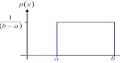 Uniform Probability Calculator - MathCracker.com