
[See] In evaluating employee performance and determining salary raises, a company uses a large number of subjective and objective criteria gathered from
Question: In evaluating employee performance and determining salary raises, a company uses a large number of subjective and objective criteria gathered from numerous evaluators that are then combined together to give each employee an overall score between 0 and 100. The raise an employee gets depends on the score as follows: people scoring under 41 points get no raise, people scoring between 41-5- get a 1 % raise, 51-60: 2 raise, 61-70: 3% raise, 71-80: 4% 81-90, 6 ‘5, 91-100" 8%. Below is a histogram of the overall scores and a scatter plot (with the correlation coefficient displayed above it) showing the score for each employee versus the length of time between when the evaluation was finished and when the employees learned the results from their managers.
- Rumors at the company suggest that the longer it takes to hear the results, the lower the score because managers may be postponing a difficult discussion with the employee about poor performance. Do the data support this concern?
- Top management is concerned about rumors that scores were unfairly bumped up a few points for many employees to help them get raises that weren’t justified by their performance. Is there any evidence of this here?
Deliverable: Word Document 
 (Step-by-Step) Sales figures for each sales associate in a large
![[Steps Shown] The price-earnings ratio (PE ratio)](/images/solutions/MC-solution-library-77199.jpg "[Steps Shown] The price-earnings ratio (PE ratio) for a stock is") [Steps Shown] The price-earnings ratio (PE ratio) for a stock is
[Steps Shown] The price-earnings ratio (PE ratio) for a stock is
 (Steps Shown) A manager of a large chain of nationwide sporting
![[Solution] Management of a soft-drink bottling company](/images/solutions/MC-solution-library-77201.jpg "[Solution] Management of a soft-drink bottling company wants to") [Solution] Management of a soft-drink bottling company wants to
[Solution] Management of a soft-drink bottling company wants to
![[All Steps] What was the basic goal](/images/solutions/MC-solution-library-77202.jpg "[All Steps] What was the basic goal of this") [All Steps] What was the basic goal of this
[All Steps] What was the basic goal of this
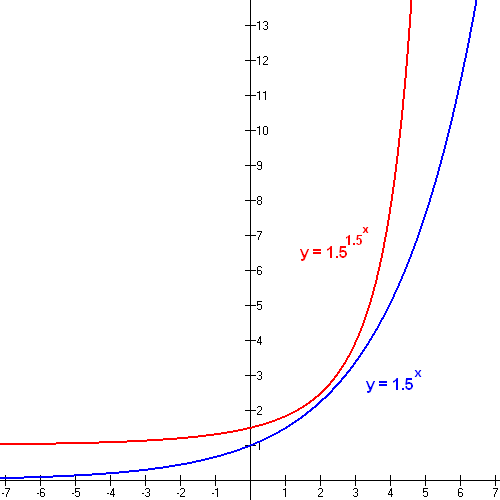 Use this Exponential Growth Calculator - MathCracker.com