
(Step-by-Step) Equilibrium point for linear dynamical system. Consider a time-invariant linear dynamical system with offset, x_t+1=A x_t+c, where x_t is
Question: Equilibrium point for linear dynamical system. Consider a time-invariant linear dynamical system with offset, \(x_{t+1}=A x_{t}+c\), where \(x_{t}\) is the state \(n\) -vector. We say that a vector \(z\) is an equilibrium point of the linear dynamical system if \(x_{1}=z\) implies \(x_{2}=z, x_{3}=z, \ldots\) (In words: If the system starts in state \(z\), it stays in state \(\left.z .\right)\) Find a matrix \(F\) and vector \(g\) for which the set of linear equations \(F z=g\) characterizes equilibrium points. (This means: If \(z\) is an equilibrium point, then \(F z=g\); conversely if \(F z=g\), then \(z\) is an equilibrium point.) Express \(F\) and \(g\) in terms of A, c, any standard matrices or vectors \((e . g ., I, 1\), or 0$)$, and matrix and vector operations.
Remark. Equilibrium points often have interesting interpretations. For example, if the linear dynamical system describes the population dynamics of a country, with the vector \(c\) denoting immigration (emigration when entries of \(c\) are negative), an equilibrium point is a population distribution that does not change, year to year. In other words, immigration exactly cancels the changes in population distribution caused by aging, births, and deaths.
Deliverable: Word Document 
 (Step-by-Step) Product of rotation matrices. Let A be the 2 * 2
![[Solution] Multiplication by a diagonal matrix. Suppose](/images/solutions/MC-solution-library-78163.jpg "[Solution] Multiplication by a diagonal matrix. Suppose that A") [Solution] Multiplication by a diagonal matrix. Suppose that A
[Solution] Multiplication by a diagonal matrix. Suppose that A
![[See Solution] Student group membership. Let G](/images/solutions/MC-solution-library-78164.jpg "[See Solution] Student group membership. Let G ∈ R^m * n") [See Solution] Student group membership. Let G ∈ R^m * n
[See Solution] Student group membership. Let G ∈ R^m * n
 (See Steps) Customer purchase history matrix. A store keeps track
 (Steps Shown) Gram matrix and QR factorization. Suppose the matrix
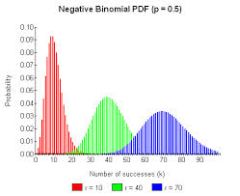 Binomial Probability Calculator - MathCracker.com