
(Solution Library) Channel equalization. We suppose that u_1, ..., u_m is a signal (time series) that is transmitted (for example by radio). A receiver receives
Question: Channel equalization. We suppose that \(u_{1}, \ldots, u_{m}\) is a signal (time series) that is transmitted (for example by radio). A receiver receives the signal \(y=c * u\), where the \(n\) -vector \(c\) is called the channel impulse response. (See page 138 of the textbook.) In most applications \(n\) is small, e.g., under 10 , and \(m\) is much larger. An equalizer is a \(k\) -vector \(h\) that satisfies \(h * c \approx e_{1}\), the first unit vector of length \(n+k-1\). The receiver equalizes the received signal \(y\) by convolving it with the equalizer to obtain \(z=h * y\).
How are \(z\) (the equalized received signal) and \(u\) (the original transmitted signal) related?
Deliverable: Word Document 
 (See Steps) Cross-product. The cross product of two 3 -vectors a=(a_1,
![[Solution] Linear functions. For each description of](/images/solutions/MC-solution-library-78201.jpg "[Solution] Linear functions. For each description of y below,") [Solution] Linear functions. For each description of y below,
[Solution] Linear functions. For each description of y below,
![[Steps Shown] Interpolation of rational functions. A](/images/solutions/MC-solution-library-78202.jpg "[Steps Shown] Interpolation of rational functions. A rational function") [Steps Shown] Interpolation of rational functions. A rational function
[Steps Shown] Interpolation of rational functions. A rational function
![[Step-by-Step] If a matrix is small, its](/images/solutions/MC-solution-library-78203.jpg "[Step-by-Step] If a matrix is small, its inverse is large. If") [Step-by-Step] If a matrix is small, its inverse is large. If
[Step-by-Step] If a matrix is small, its inverse is large. If
![[Step-by-Step] Interpolation of rational functions. Please refer](/images/solutions/MC-solution-library-78204.jpg "[Step-by-Step] Interpolation of rational functions. Please refer") [Step-by-Step] Interpolation of rational functions. Please refer
[Step-by-Step] Interpolation of rational functions. Please refer
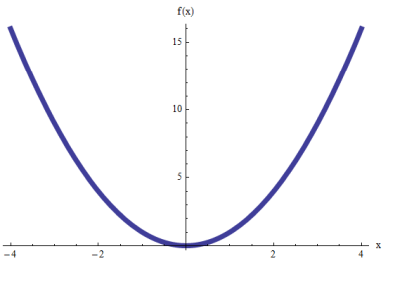 The Parabola - MathCracker.com