
[Steps Shown] Assume that M C(q)=(a q+b)^1/2 where a>0, b>0 Suppose that TC(0)=0 . Determine TC(q) Given the information in (a), can you represent TC(q_0)
Question: Assume that
\[M C(q)=(a q+b)^{\frac{1}{2}}\]where \(a>0\), \(b>0\)
- Suppose that \(TC(0)=0 .\) Determine \(TC(q)\)
- Given the information in (a), can you represent \(TC\left(q_{0}\right)\) as an area under MC? If so then do so. If not then why not?
- Suppose that \(TC(0)=10\). Determine \(TC(q)\).
- Given the information in (c), can you represent \(TC\left(q_{0}\right)\) as an area under MC? If so, then do so. If not then why not?
Deliverable: Word Document 
 (Solution Library) A monopolist produces at total cost TC(y),
![[Step-by-Step] (An intercustomer price discrimination problem) Assume](/images/solutions/MC-solution-library-64056.jpg "[Step-by-Step] (An intercustomer price discrimination problem) Assume") [Step-by-Step] (An intercustomer price discrimination problem) Assume
[Step-by-Step] (An intercustomer price discrimination problem) Assume
![[All Steps] An individual has the utility](/images/solutions/MC-solution-library-64057.jpg "[All Steps] An individual has the utility function U(x,y)=ye^x") [All Steps] An individual has the utility function U(x,y)=ye^x
[All Steps] An individual has the utility function U(x,y)=ye^x
 (Solved) Consider the one-way ANOVA example with equal numbers of
![[Solved] Consider the two-way ANOVA: y_i j](/images/solutions/MC-solution-library-64059.jpg "[Solved] Consider the two-way ANOVA: y_i j k=μ+α_j+β_k+(α") [Solved] Consider the two-way ANOVA: y_i j k=μ+α_j+β_k+(α
[Solved] Consider the two-way ANOVA: y_i j k=μ+α_j+β_k+(α
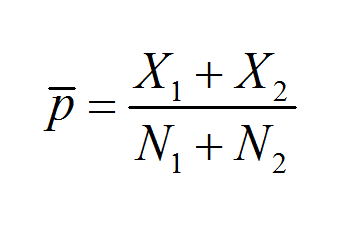 Pooled Proportion Calculator - MathCracker.com