
[Solution] This altimeter height bias is just one of many errors that contribute to the overall error budget of the altimetric height. Let's say that we
Question: This altimeter height bias is just one of many errors that contribute to the overall error budget of the altimetric height. Let's say that we wish to know if the height error is less than \(13 \mathrm{~cm}\). Set up the null hypothesis \(\left(\mathrm{H}_{0}\right)\) that the true mean is less than \(13 \mathrm{~cm}\). This means that we do not wish to erroneously reject the hypothesis more than \(\alpha \times 100 \%\) of the time (where \(1-\alpha\) is the confidence interval). If we define our hypothesis limit, HL, as
\[HL=13\,c\text{m}+\frac{{{\text{Z}}_{\alpha }}{{\text{S}}_{b}}}{\sqrt{\text{n}}}\]then if the mean of our measurements is greater than \(\mathrm{HL}\), we should reject \(\mathrm{H}_{0}\) and conclude that the mean is greater than \(13 \mathrm{~cm}\) with a probability \(\alpha\) of being wrong. If after 9 measurements are taken each measurement is assumed to have an uncertainty of \(3 \mathrm{~cm}\) and the mean height error is estimated to be \(15 \mathrm{~cm}\), do we accept or reject the hypothesis for \(\alpha=0.10 ?\) For \(\alpha=0.05\) ? For \(\alpha=0.01\) ?
Deliverable: Word Document 
![[Solved] The likelihood function of n random](/images/solutions/MC-solution-library-34124.jpg "[Solved] The likelihood function of n random variables \mathrmX_1,") [Solved] The likelihood function of n random variables \mathrmX_1,
[Solved] The likelihood function of n random variables \mathrmX_1,
 (Solved) Let y_1, ..., y_n be a random sample from f(y ; μ,
 (Solution Library) Let Y_1, ..., Y_n denote independent random variables
![[All Steps] A linear model of the](/images/solutions/MC-solution-library-34127.jpg "[All Steps] A linear model of the form y_i=β_1 x_i+β_0 for") [All Steps] A linear model of the form y_i=β_1 x_i+β_0 for
[All Steps] A linear model of the form y_i=β_1 x_i+β_0 for
![[See Solution] For two joint normally distributed](/images/solutions/MC-solution-library-34128.jpg "[See Solution] For two joint normally distributed time series x_i") [See Solution] For two joint normally distributed time series x_i
[See Solution] For two joint normally distributed time series x_i
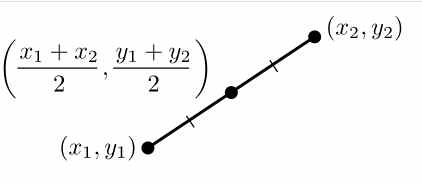 Midpoint Formula - MathCracker.com