(See Solution) Willerman et al. (1991) collected a sample of 40 right-handed - #80080
Brain Size and Intelligence
Willerman et al. (1991) collected a sample of 40 right-handed Anglo introductory psychology students at a large southwestern university. Subjects took four subtests (Vocabulary, Similarities, Block Design, and Picture Completion) of the Wechsler (1981) Adult Intelligence Scale-Revised. The researchers used Magnetic Resonance Imaging (MRI) to determine the brain size of the subjects. Information about gender and body size (height and weight) is also included. The researchers withheld the weights of two subjects and the height of one subject for reasons of confidentiality.
Number of cases: 40
Variable Names:
- Gender: Male or Female (Male = 1 and Female = 2)
- FSIQ: Full Scale IQ scores based on the four Wechsler (1981) subtests
- Intelligence Level (1= Below Average, 2 = Average and 3= Above Average).
- VIQ: Verbal IQ scores based on the four Wechsler (1981) subtests
- PIQ: Performance IQ scores based on the four Wechsler (1981) subtests
- Weight: body weight in pounds
- Height: height in inches
- MRI Count: total pixel Count from the 18 MRI scans (in units of thousands, for example a value of 817 would be equivalent to 817 thousand).
The information above describes the dataset "Brain Size and Intelligence". You are to use SPSS to answer analyze the Brian Size and Intelligence" data file to answer the following questions.
Include the following for each answer:
A. The rationale or justification for your analysis
B. An interpretation of your results.
C. Include your SPSS outputs
D. Please make sure to use all the statistical results terminology (e.g. t = 3.45, p = .000; r = .75, p = .000; X2(2) = 7.89, p = .000) when reporting your results.
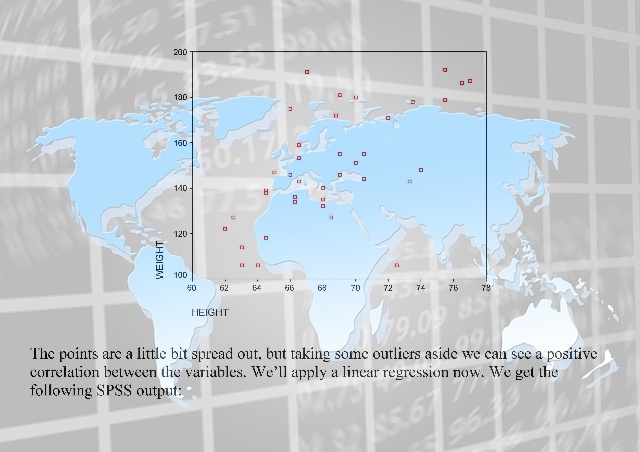
1. Describe the relationship between height and weight. Interpret this result.
2. Describe the relationship between FSIQ and Weight. Interpret what this result means.
3. What is the mean MRI count for below average, average and above average psychology students?
4. Produce a histogram of the MRI counts for each of the three intelligence level categories
a. Does the data meet the assumptions of homogeneity of variances (similar variances among groups) and normality necessary for conducting parametric data analysis procedures?
b. Is there a significant difference between mean MRI counts for students classified in the three intelligence level categories referred to question #3? Interpret the results from the analysis that you would use to answer this question.
What Makes Kids Popular
The participants for this study were students in grades 4-6 from three school districts in Ingham and Clinton Counties, Michigan. Chase and Dummer stratified their sample, selecting students from urban, suburban, and rural school districts with approximately 1/3 of their sample coming from each district. Students indicated whether good grades, athletic ability, or popularity was most important to them. They also ranked four factors: grades, sports, looks, and money, in order of their importance for popularity. The questionnaire also asked for gender, grade level, and other demographic information.
Number of cases: 478
Variable Names (Please refer to your SPSS data file, "What Makes Kids Popular").
1. Gender: ( Boy = 1 or Girl = 2)
2. Grade: 4th, 5th or 6th
3. Age: Age in years
4. Urban/Rural ( Rural =1, Suburban=2, or Urban school district=3)
5. Goals: Student's choice in the personal goals question where options were 1 = Make Good Grades, 2 = Be Popular, 3 = Be Good in Sports
6. Grades: Rank of "make good grades" (1=most important for popularity, 4=least important)
7. Sports: Rank of "being good at sports" (1=most important for popularity, 4=least important)
8. Looks: Rank of "being handsome or pretty" (1=most important for popularity, 4=least important)
9. Money: Rank of "having lots of money" (1=most important for popularity, 4=least important) )
Reference: Chase, M. A., and Dummer, G. M. (1992), "The Role of Sports as a Social Determinant for Children," Research Quarterly for Exercise and Sport, 63, 418-424.
The information above describes the dataset "What Makes Kids Popular". You are to use SPSS to answer analyze the popular kids data file to answer the following questions.
Include the following for each answer:
A. The rationale or justification for your analysis
B. An interpretation of your results.
C. Please make sure to use all the statistical results terminology (e.g. t = 3.45, p = .000; r = .75, p = .000; X2(2) = 7.89, p = .000) when reporting your results.
1. What was the percent of students were from rural, suburban and urban schools?
2. What percent of students felt that Grades where the most important goal for them?
3. What was the frequency of responses (ranging from 1 to 4) to the question that asked students to rate importance of being popular in relation to "having lots of money"?
4. Is there significant a relationship between gender and the type of personal goals (variable #5) that students indicated where important to them? How do you know? Interpret the results from that analysis that you would conduct to answer this question.
5. A. Describe how students ranked responses for the question "Making Good Grades".
B. Did the boys average ranking for this question differ from that of the girls?
C. Was the difference significant? Interpret the results from the analysis that you would conduct to answer this question.
6. For questions 4 and 5, what does it mean when we make the decision that a result is significant? Be sure to address the issues of:
a. Probability
b. Type I errors (Alpha)
c. Type II errors (Beta)
Make sure that you explain these concepts using the results you obtained from questions 5 and 6.
Deliverable: Word Document
 and pdf