A service station orders 100 cases of motor oil every 6 months. The number of cases of oil remaining t
10. A service station orders 100 cases of motor oil every 6 months. The number of cases of oil remaining t months after the order arrives is modeled by
\[f(t)=100{{e}^{-0.5t}}\] .- How many cases are there at the start of the six-month period? How many cases are left at the end of the six-month period?
- Find the average number of cases in inventory over the six-month period.
12. The population of the world t years after 2000 is predicted to be \[P=6.1{{e}^{0.0125t}}\] billion.
- What population is predicted in 2010?
- What is the predicted average population between 2000 and 2010?
4. The demand curve for a product has equation \[p=20{{e}^{-0.002q}}\] and the supply curve has equation \[p=0.02q+1\] for \[0\le q\le 1000\] , where q is quantity and p is price in $/unit.
- Which is higher, the price at which 300 units are supplied or the price at which 300 units are demanded? Find both prices.
- Sketch the supply and demand curves.
- Using the equilibrium price and quantity, calculate and interpret the consumer and producer surplus.
6. The demand curve for a product has equation \[p=100{{e}^{-0.008q}}\] and the supply curves had equation \[p=4\sqrt{q}+10\] for \[0\le q\le 500\] , where q is quantity and p is price in dollars per unit.
-
At a price of $50, what quantity are consumers willing to buy and what quantity are producers willing to supply?
Consumers are willing to buy ???
Supply at price of $50:
Producers are willing to supply ??? -
Find the equilibrium price and quantity.
Does your answer to part (a) support the observation that market forces tend to push prices closer to the equilibrium price? - At the equilibrium price, calculate and interpret the consumer and producer surplus.
14. A recently installed machine earns the company revenue at a continuous rate of 60,000t + 45,000 dollars per year during the first six months of operation and at the continuous rate of 75,000 dollars per year after the first six months. The cost of the machine is $150,000, the interest rate is 7% per year, compounded continuously, and t is time in years since the machine was installed.
\[S(t)=\left\{ \begin{aligned}
& 60,000t+45,000\quad t\le 0.5 \\
& 75,000\quad \quad \quad \quad \ t>0.5 \\
\end{aligned} \right\}\]
- Find the present value of the revenue earned by the machine during the first year of operation.
- Find how long it will take for the machine to pay for itself; that is, how long it will take for the present value of the revenue to equal the cost of the machine?
15. The value of good wine increases with age. Thus, if you are a wine dealer, you have the problem of deciding whether to sell your wine now, at a price of $P a bottle, or to sell it later at a higher price. Suppose you know that the amount a wine-drinker is willing to pay for a bottle of this wine t years from now is \[\\(P(1+20\sqrt{t})\] . Assuming continuous compounding and a prevailing interest rate of 5% per year, when is the best time to sell your wine?
16. An oil company discovered an oil reserve of 100 million barrels. For time t > 0, in years, the company’s extraction plan is a linear declining function of time as follows:
\[q(t)=a-bt\] ,
where q(t) is the rate of extraction of oil in millions of barrels per year at time t and b = 0.1 and a = 10.
- How long does it take to exhaust the entire reserve?
- The oil price is a constant $20 per barrel, the extraction cost per barrel is a constant $10, and the market interest rate is 10% per year, compounded continuously. What is the present value of the company’s profit?
16. In everyday language, exponential growth means very fast growth. In this problem, you will see that any exponentially growing function eventually grows faster than any power function.
- Show that the relative growth rate of the function \[f(x)={{x}^{n}}\] , for fixed n > 0 and for x > 0, decreases as x increases.
- Assume k > 0 is fixed. Explain why, for large x, the relative growth rate of the function \[g(x)={{e}^{kx}}\] is larger than the relative growth rate of f(x).
The Relative Growth Rate =
Deliverable: Word Document

-
![[Solution Library] Construct a frequency distribution and](data:image/svg+xml,%3Csvg%20xmlns='http://www.w3.org/2000/svg'%20viewBox='0%200%20150%20150'%3E%3C/svg%3E "[Solution Library] Construct a frequency distribution and a histogram") [Solution Library] Construct a frequency distribution and a histogram
[Solution Library] Construct a frequency distribution and a histogram
-
(All Steps) This is the rough introduction to the problem . In
-
Solution: Describe the similarities between an F-ratio and a
-
(All Steps) What are the primary advantages of a repeated-measures
-
(See Steps) Suppose ZiLog Incorporated develops 8-bit micrologic
-
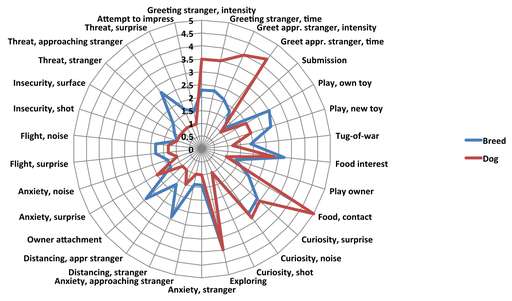
Radar Chart Maker - MathCracker.com
![[Solution Library] Construct a frequency distribution and](/images/solutions/MC-solution-library-80728.jpg "[Solution Library] Construct a frequency distribution and a histogram")