4.2. The researcher who assisted with the workshop (and with other workshops) decided to test if there
4.2. The researcher who assisted with the workshop (and with other workshops) decided to test if there was a difference in knowledge and performance between educators in the "humanities" program (English and French program areas) and those in the "sciences" program (Biology and Physics program areas). Was there a difference on the initial test mark means between these two groups in the workshop? Was there a difference in composite performance indicator score means between these two groups? (Conduct statistical tests to determine if the differences are significant. State hypotheses, critical values for the t-statistic, and decision rules for the statistical tests, and make sure to make meaningful concluding statements.)
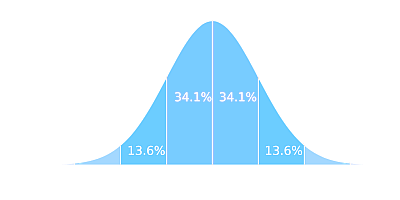
4.3. To conduct tests of significance (such as t-tests and F-tests) several assumptions are made about the distribution of scores: that they are reasonably normal, and that the variances of the groups are homogeneous. Check the distributions for normality (you may wish to include the notion of skewness) and test homogeneity of variances for the two groups for both variables (for the two significance tests in 4.2).
This involves checking the scores for each group to determine if they are reasonably normally distributed: are means and medians similar? are the data skewed? does the distribution look similar to one that is normal?
The second part is to check the homogeneity of variance. This can be done using the Fmax test (see Gravetter & Wallnau, 2008) or the Levene’s test which SPSS provides.
(4 marks)
4.4. The researcher was interested in determining what effects the workshop might have on knowledge at the end of the workshop, and on performance at a later date.
It was possible to compare the knowledge test marks that the educators obtained prior to the workshop with the marks that they obtained at the end of the workshop. In particular, was there evidence of improvement from the initial knowledge test marks to those obtained at the end of the workshop on the posttest?
Further, was there evidence of change on the composite performance indicator scores that educators obtained at the end of the workshop to what they obtained once they were back in their teaching settings for a month (long-term)?
You can assume that the mean is a good measure of central tendency, and therefore is a good representation of possible change in scores. So this question requires a significance test for a comparison of means for paired groups (hypothesis tests with related samples).
(4 marks)
4.5. Using SPSS produce 95% and 99% confidence intervals for the means of the humanities group and the sciences group on the long-term composite performance indicator scores. (Note that this is the confidence interval for the mean, not for the difference in means.)
Deliverable: Word Document

-
 (See Solution) Measures of Central Tendency and Dispersion with SPSS
-
[See Solution] This is a case study that requires linear programming
-
[Solution Library] Brief Description of Study. In this study,
-
[Solution] Brief Description of Study. Researchers were interested
-
(All Steps) Brief Description of Study The authors were interested
-
Hypothesis Testing (Part 1) - MathCracker.com

![[See Solution] This is a case study](/images/solutions/MC-solution-library-82205.jpg "[See Solution] This is a case study that requires linear programming")
![[Solution Library] Brief Description of Study. In](/images/solutions/MC-solution-library-82206.jpg "[Solution Library] Brief Description of Study. In this study,")
![[Solution] Brief Description of Study. Researchers were](/images/solutions/MC-solution-library-82207.jpg "[Solution] Brief Description of Study. Researchers were interested")