Part 1: Subjective Probabilities with Pennies The objective of this project is to compare certain theoretical
Part 1: Subjective Probabilities with Pennies
The objective of this project is to compare certain theoretical (expected) probabilities with the outcomes obtained by a random experiment.
The physical phenomenon that will be observed is the distribution of heads and tails by tossing 10 pennies, counting the number of heads, and repeating this process 60 times. The main objective is to compare the theoretical results with the results obtained by this experiment.
Also, graphs will be used to illustrate compare the theoretical results with the actual experimental results.
P roject II, Part One: Subjective Probability
Before tossing the coins , make the following predictions. Remember the rule of a probability distribution is that the sum of all possible mutually exclusive outcomes has to be one (1). Note that getting 3 heads and getting exactly 5 heads are mutually exclusive events. Also, think about how the probability of getting 3 heads relates to the probability of getting 7 tails. Think about the situation and then answer the questions below with your best guesses. Do not look up or compute these probabilities but do think about the values. You will be graded on the reasonableness of your guesses. These are guesses, not computed values. Copy and paste this part into the rest of your projec t.
- What percent of the time do you expect to get 5 heads? ________
- What percent of the time do you expect to get 3 heads? ________
-
What percent of the time do you expect to get 7 heads?
________
(7 heads means 3 tails, which is the same likelihood as getting 3 heads) - What percent of the time do you expect to get no heads? ________
- What percent of the time do you expect to get all heads? ________
-
Use your guesses above to fill in the chart below for all of the outcomes.
X = Heads 0 1 2 3 4 5 6 7 8 9 10 Prob(X)
Notice that the values are not adjusted yet to add up to 1. - Adjust your guesses for 1-6 above until the two rules of probability are satisfied (Each value is between 0 and 1 and the sum of all of the probabilities is 1.
- After throwing 600 coins, how many heads would you expect?
-
How is the probability of getting three heads related to the probability of getting seven tails? Explain
your answer
.
-
How is the probability of getting three heads related to the probability of getting three tails? Explain
your answer
.
Project II, Part Three: Theoretical Probability
Deliverable: Word Document

-
![[See Solution] Gather data: Gather a list](data:image/svg+xml,%3Csvg%20xmlns='http://www.w3.org/2000/svg'%20viewBox='0%200%20150%20150'%3E%3C/svg%3E "[See Solution] Gather data: Gather a list of the names of all") [See Solution] Gather data: Gather a list of the names of all
[See Solution] Gather data: Gather a list of the names of all
-
(See Steps) Descriptive Statistics -- DDXL and Boxplots Instructions
-
[Steps Shown] Case problem S13.1, pages 638-639, Mossaic Tile
-
(All Steps) Hypothesis Testing and Regression Analysis Identify
-
(See Steps) For exercises 1-8, use the data in the table, which
-
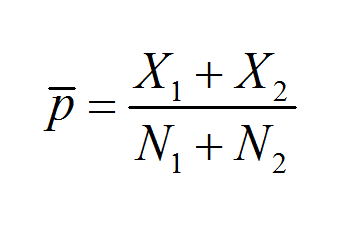
Pooled Proportion Calculator - MathCracker.com
![[See Solution] Gather data: Gather a list](/images/solutions/MC-solution-library-80468.jpg "[See Solution] Gather data: Gather a list of the names of all")
![[Steps Shown] Case problem S13.1, pages 638-639,](/images/solutions/MC-solution-library-80470.jpg "[Steps Shown] Case problem S13.1, pages 638-639, Mossaic Tile")