Homework Submission Instructions Please submit your assignment as an MS Word or PDF document with your
Homework Submission Instructions
- Please submit your assignment as an MS Word or PDF document with your last names, e.g. "MBA703 Assignment x Smith Singh Shang.docx". Please do not submit Excel spreadsheets.
-
Please write out the parameter values and formulas you are using to calculate the answers. Please do not paste excel spreadsheet cells- they are often difficult to interpret, and even more difficult to investigate if your answers are incorrect.
Suggestions - Please work in your 2-3 person MBA 703 homework team on the following and turn in one set for each team .
- Since this is a group assignment, please attempt to solve the questions individually before comparing and completing the assignment.
Homework 1 (Group) 60 points
Please work in your 2-3 person MBA 703 homework team on the following and turn in one set for each team .
- Capacity Analysis ( 35 points)
Kameras Inc. produces a camera called EasyShoot. EasyShoot currently comes in one version called the "Daytime". Kameras Inc. produces this camera in a factory that operates 24 hours a day (in 3 shifts of 8 hours), 365 days per year. After all relevant costs have been accounted for, Kameras Inc. makes a profit of $50 per camera. Assume throughout this question that EasyShoot demand is so high that Kameras Inc. can sell any quantity that is produced.
The manufacturing process has four steps:
- Viewfinder production : It takes 1 person 8 minutes to produce a viewfinder. Each shift has 6 people working on viewfinder production.
- Optics Subassembly production : It takes 1 person 6 minutes to produce an optics subassembly. Each shift has 10 people working on optics subassembly production.
- Camera Assembly : A Daytime camera is assembled from 1 viewfinder and 2 optics subassemblies. It takes 1 person 4 minutes to assemble a Daytime camera. Each shift has 4 people working on camera.
- Camera Test : Every camera produced is tested on a single test machine. The machine tests the cameras in batches of size 15. It takes 10 minutes to set up the machine and then 20 seconds to test each camera. Exactly 95% of the cameras pass inspection. Cameras that fail inspection are discarded (i.e. no parts can be salvaged). The only reason that a camera can fail inspection is due to a viewfinder defect, i.e., a camera never fails inspection because of problems with any other aspect of production.
- (15 points) How much profit does the factory generate in a day?
- (10 points) Senior management is discussing the possibility of adding a new camera model, the "Anytime" camera. This will require one new step, as indicated below:
- Flash Subassembly production : It takes 1 person 8 minutes to produce a flash subassembly. Each shift has 3 people working on flash subassembly production.
All other work on the Anytime camera will be done using the company’s existing resources. An Anytime camera is assembled from 1 flash subassembly, 1 viewfinder and 3 optics subassemblies. It takes 1 Camera Assembly worker 6 minutes to assemble an Anytime camera (all workers can assemble either type of camera). Kameras, Inc. earns a profit of $60 on each Anytime camera it sells.
Assuming that an equal number of Daytime and Anytime cameras will be produced and sold, what is the daily profit after adding the Anytime camera to the product line?
- (10 points) A new testing machine has come on the market. The machine costs $500,000 and has the following two features: (i) it does not require any set up (but it still takes 20 seconds to test a camera’s viewfinder). (ii) It does not have to wait until the camera is assembled to test the viewfinder, i.e., it can test viewfinders earlier in the process. Assuming Kameras Inc. still produces an equal mix of Daytime and Anytime cameras, will the new testing machine pay for itself within one year? Please justify your answer. (Note: assume for simplicity that there is no disposal cost/value associated with retiring the current machine.)
2. Café McColl (25 points)
During the busy lunch period at Café McColl, customers arrive at the rate of 200 customers/hour. Studies have indicated that 30% of the customers order their lunch from the Grill, and 50% of customers get lunch from the Deli (the remaining 20% just get self-service items). All customers pay for their food at the cash register. On average, the grill-chef takes 40 seconds to serve a customer, the deli-chef takes 30 seconds, and the register-clerk takes 12 seconds. (Assume that all service time and interarrival times are distributed exponentially, and that there is one employee at each of the three stations.)
- (10 points) What is the average throughput time (including both waiting and service time) at the Grill? The Deli? The Register?
- (5 points) How long does the average customer spend being served at Café McColl (don’t count the time walking from one spot to another or getting self-service items)?
- (10 points) As manager of Café McColl, you have been authorized by the state legislature (all salary increases must be approved by this body) to give a performance bonus to one of your employees. This bonus will cause the employee to work 10% faster. Which employee -- grill-chef, deli-chef, or register-clerk -- should receive this bonus (in addition to any calculations you perform, please give a one sentence justification for your choice)?
Deliverable: Word Document

-
![[Solution] The Segway IPO Dean Kamen, Chairman](data:image/svg+xml,%3Csvg%20xmlns='http://www.w3.org/2000/svg'%20viewBox='0%200%20150%20150'%3E%3C/svg%3E "[Solution] The Segway IPO Dean Kamen, Chairman and CEO of Segway") [Solution] The Segway IPO Dean Kamen, Chairman and CEO of Segway
[Solution] The Segway IPO Dean Kamen, Chairman and CEO of Segway
-
[Solution Library] Wilson Contract Manufacturing (WCM) 1 The Wilson
-
[See Solution] EITC. Assume that the structure of EITC is as follows:
-
[Solution Library] Activity 2.7 Group Case Study: Starting Right
-
[See Solution] Analysis of Credit Card Debt Introduction The purpose
-
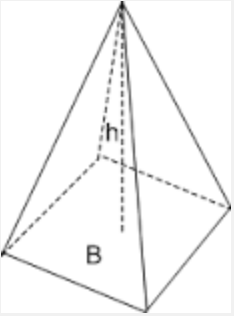
Area and Volume of a Pyramid - MathCracker.com
![[Solution] The Segway IPO Dean Kamen, Chairman](/images/solutions/MC-solution-library-82670.jpg "[Solution] The Segway IPO Dean Kamen, Chairman and CEO of Segway")
![[Solution Library] Wilson Contract Manufacturing (WCM) 1](/images/solutions/MC-solution-library-82671.jpg "[Solution Library] Wilson Contract Manufacturing (WCM) 1 The Wilson")
![[See Solution] EITC. Assume that the structure](/images/solutions/MC-solution-library-82672.jpg "[See Solution] EITC. Assume that the structure of EITC is as follows:")
![[Solution Library] Activity 2.7 Group Case Study:](/images/solutions/MC-solution-library-82673.jpg "[Solution Library] Activity 2.7 Group Case Study: Starting Right")
![[See Solution] Analysis of Credit Card Debt](/images/solutions/MC-solution-library-82674.jpg "[See Solution] Analysis of Credit Card Debt Introduction The purpose")