Chi-Square Goodness of Fit Test. Use data set 2. In the population from which the sample was drawn, 20%
- Chi-Square Goodness of Fit Test. Use data set 2. In the population from which the sample was drawn, 20% of employees are clerical, 50% are technical, and 30% are professional. Determine whether or not the sample drawn conforms to these values. Enter the category values (1,2,3) and relative percentages (20,50,30). The variable category is nominal.
- Chi-Square Test for Independence. A researcher wants to know if individuals are more likely to help in an emergency when they are indoors or when they are outdoors. Of 28 participants who were outdoors, 19 helped and 9 did not. Of 23 participants who were indoors, 8 helped and 15 did not. Enter these data, and find out if helping behavior is affected by the environment.
- Mann-Whitney U test. Use data set 1. Determine if younger participants (less than age 26) have significantly lower math scores than older participants. Create a new ordinal variable representing each age group.
- Wilcoxon test. Use the RACE.sav data to determine whether or not the outcome of short distance races is different from that of medium distance races.
- Kruskal-Wallis H test. Use data set 2. Job classification is ordinal. Determine if males and females have differing levels of job classifications. Clerical=1, Technical=2, and Professional=3.
- Friedman test. Use data set 3. If anxiety is measured on an ordinal scale, determine if anxiety levels changed over time.
Data Set 1:
You have conducted a study in which you collected data from 23 participants. You gave each subject a test to measure math skills (Skill), where the higher scores indicated a higher skill level. The data are shown below.
Measured on a nominal scale
Sex: 1=male, 2=female
Marital status: 1=single, 2=married, 3=divorced
Sex Age Marital Skill
| M | 23 | Single | 34 |
| F | 35 | Married | 40 |
| F | 40 | Divorced | 38 |
| M | 19 | Single | 20 |
| M | 28 | Married | 30 |
| F | 35 | Divorced | 40 |
| F | 20 | Single | 38 |
| F | 29 | Single | 47 |
| M | 29 | Married | 26 |
| M | 40 | Married | 24 |
| F | 24 | Single | 45 |
| M | 23 | Single | 37 |
| F | 18 | Single | 44 |
| M | 21 | Single | 38 |
| M | 50 | Divorced | 32 |
| F | 25 | Single | 29 |
| F | 20 | Single | 38 |
| M | 24 | Single | 19 |
| F | 37 | Married | 29 |
| M | 42 | Married | 42 |
| M | 35 | Married | 59 |
| M | 23 | Single | 45 |
| F | 40 | Divorced | 20 |
Data Set 2:
A survey of employees is conducted. Each employee provides the information given below.
Sex: male=1, female=2
Classification Key: Clerical=1, Technical=2, Professional=3
Measured on a nominal scale.
| Salary | Years of Service | Sex | Classification | Education |
| 35,000 | 8 | M | T | 14 |
| 18,000 | 4 | F | C | 10 |
| 20,000 | 1 | M | P | 16 |
| 50,000 | 20 | F | P | 16 |
| 38,000 | 6 | M | P | 20 |
| 20,000 | 6 | F | C | 12 |
| 75,000 | 17 | M | P | 20 |
| 40,000 | 4 | F | T | 12 |
| 30,000 | 8 | M | T | 14 |
| 22,000 | 15 | F | C | 12 |
| 23,000 | 16 | M | C | 12 |
| 45,000 | 2 | F | P | 16 |
Data Set 3:
Participants who have phobias are given one of three treatments (condition). Their anxiety level (1-10) is measured during three intervals-before treatment (anxpre), one hour after treatment (anx1hr), and again four hours after treatment (anx4hr). The results are shown below.
Before treatment= anxpre
One hour after treatment= anx1hr
Four hours after treatment=anx4hr
Measured on a nominal scale.
| Anxpre | Anx 1hr | Anx 4hr | Condition |
| 8 | 7 | 7 | Placebo |
| 10 | 10 | 10 | Placebo |
| 9 | 7 | 8 | Placebo |
| 7 | 6 | 6 | Placebo |
| 7 | 7 | 7 | Placebo |
| 9 | 4 | 5 | Val |
| 10 | 6 | 8 | Val |
| 9 | 5 | 5 | Val |
| 8 | 3 | 5 | Val |
| 6 | 3 | 4 | Val |
| 8 | 5 | 3 | Exp |
| 6 | 5 | 2 | Exp |
| 9 | 8 | 4 | Exp |
| 10 | 9 | 4 | Exp |
| 7 | 6 | 3 | Exp |
Race.SAV DATA
| Long | Medium | Short | Experience |
| 1 | 4.00 | 6 | 2.00 |
| 2 | 3.00 | 4 | 2.00 |
| 3 | 2.00 | 7 | 2.00 |
| 4 | 5.00 | 3 | 2.00 |
| 5 | 1.00 | 10 | 1.00 |
| 6 | 8.00 | 5 | 1.00 |
| 7 | 7.00 | 12 | 1.00 |
| 8 | 6.00 | 1 | 1.00 |
Deliverable: Word Document

-
 (All Steps) Topics: Analysis of Covariance goals, assumptions,
-
[Steps Shown] Screen a dataset for errors and then prepare the
-
[Solved] Topics: MANOVA goals, assumptions, analyses, interpretations
-
(Step-by-Step) Topics: Repeated Measures ANOVA Goals, assumptions,
-
[Step-by-Step] The following three scenarios are each based on
-
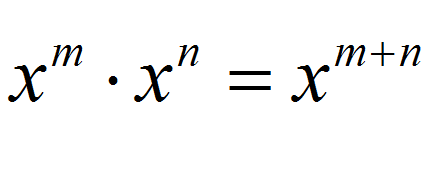
Rules of Exponents and its Operations - MathCracker.com

![[Steps Shown] Screen a dataset for errors](/images/solutions/MC-solution-library-82216.jpg "[Steps Shown] Screen a dataset for errors and then prepare the")
![[Solved] Topics: MANOVA goals, assumptions, analyses, interpretations](/images/solutions/MC-solution-library-82217.jpg "[Solved] Topics: MANOVA goals, assumptions, analyses, interpretations")

![[Step-by-Step] The following three scenarios are each](/images/solutions/MC-solution-library-82219.jpg "[Step-by-Step] The following three scenarios are each based on")