Assignment Problems Section 3.3 Are the events mutually exclusive (Yes or No)? Event A: Randomly select
Assignment Problems
Section 3.3
-
Are the events mutually exclusive (Yes or No)?
Event A: Randomly select a person between 18 and 24 years old.
Event B: Randomly select a person that drives a convertible. -
Are the events mutually exclusive (Yes or No)?
Event A: Randomly select a person who uses email.
Event B: Randomly select a person that uses social networking.
Problems 3-7. Use the table below to answer the questions.
Nursing Majors. The table below shows the number of male and female students enrolled in nursing at a university for a recent semester. Find the specified probability.

- The student is male or a non-nursing major.
- The student is female or a nursing major.
- A student is not male or a nursing major.
- The student is male or a nursing major.
-
Are the events "being male" and "being a nursing major" mutually exclusive?
Section 3.4 - Perform the indicated calculation. 24 P 5
-
Experimental Group In order to conduct an experiment, 9 subjects are randomly selected from a group of 25 subjects. How many different groups of nine subjects are possible?
Problems 10-11. Use the information below to answer the questions.
Lock Combination. A combination lock has 5 programmable digits. The first digit may be set to whole number values from 1 to 5. The last four digits may be set to whole number values from 0-9. - How many lock combinations are possible if there are no restrictions?
-
What is the probability of selecting a combination code at random that ends with an odd number?
Section 4.1 -
Determine if the random variable x is discrete or continuous. Explain the reason for your answer. x is the time required for workers at a factory to complete a task.
Problems 13-17. Use the frequency distribution below to answer the questions.
Extracurricular Activities. The number of school-related extracurricular activities per student.

Activities 0 1 2 3 4 5 6 7
Students 24 33 46 57 63 36 20 14 - Use the frequency distribution to construct a probability distribution.
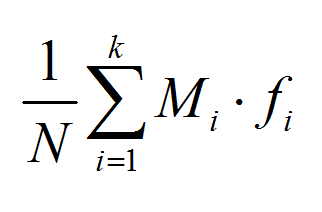
- What is the mean of the probability distribution?
- What is the variance of the probability distribution?
- What is the standard deviation of the probability distribution?
-
Interpret the results in the context of the real-life situation. (For help with the interpretation, refer to similar worked examples in section 4.1.)
Section 4.2
Identifying binomial experiments. Use the information below to answer question 18.
Lottery A state lottery randomly chooses 6 balls numbered 1 from 1 to 40. You choose 6 numbers and purchase a lottery ticket. The random variable represents the number of matches on your ticket to the numbers drawn in the lottery. -
Is this experiment a binomial experiment? Explain your answer.
Use the characteristics of the binomial distribution given below to answer questions 19- 21
Suppose there is a binomial distribution with: n = 63 and p = 0.38 - What is the mean of the binomial distribution?
- What is the variance of the binomial distribution?
-
What is the standard deviation of the binomial distribution?
Problems 22-25. Use the characteristics of the binomial experiment below to answer the questions.
Travel Plans. Seventeen percent of married couples say they are planning a trip to Europe.
You randomly select 15 married couples and ask each if they are planning to travel to Europe. - What is the probability that exactly 1 couple says they plan to travel to Europe?
- What is the probability that more than 1 couple say they plan to travel to Europe?
- What is the probability that at most 2 couples say they plan to travel to Europe?
- What is the probability that less than 5 couples say they plan to travel to Europe?
Price: $16.27
Solution: The downloadable solution consists of 8 pages, 827 words and 2 charts.
Deliverable: Word Document
Deliverable: Word Document
-
![[All Steps] Assignment Problems Section 1.1 True](data:image/svg+xml,%3Csvg%20xmlns='http://www.w3.org/2000/svg'%20viewBox='0%200%20150%20150'%3E%3C/svg%3E "[All Steps] Assignment Problems Section 1.1 True or false? A population") [All Steps] Assignment Problems Section 1.1 True or false? A population
[All Steps] Assignment Problems Section 1.1 True or false? A population
-
[Step-by-Step] Give an example each of a functional product and an
-
[Solved] How many more men than women in the sample were self-employed?
-
(Solution Library) During class, using a number of financial ratios
-
[Step-by-Step] NEVADA GAMING CASE - EXCEL EXERCISE Congratulations!
-
Sample Mean of Grouped Data Calculator - MathCracker.com
![[All Steps] Assignment Problems Section 1.1 True](/images/solutions/MC-solution-library-82814.jpg "[All Steps] Assignment Problems Section 1.1 True or false? A population")
![[Step-by-Step] Give an example each of a](/images/solutions/MC-solution-library-82815.jpg "[Step-by-Step] Give an example each of a functional product and an")
![[Solved] How many more men than women](/images/solutions/MC-solution-library-82816.jpg "[Solved] How many more men than women in the sample were self-employed?")

![[Step-by-Step] NEVADA GAMING CASE - EXCEL EXERCISE](/images/solutions/MC-solution-library-82818.jpg "[Step-by-Step] NEVADA GAMING CASE - EXCEL EXERCISE Congratulations!")