
If you have ever sat down for a timed assessment and felt the quiet pressure of pattern recognition under a clock, you already know the particular challenge of a logical reasoning test. These structured cognitive assessments have become one of the most common gatekeepers in hiring, academic admissions, and professional development programs around the world. For those with a natural affinity for mathematical thinking, they represent both an opportunity and a puzzle worth understanding in detail.

Let's break down what logical reasoning tests actually measure, how they are scored, and what you can do to perform at your best.
What Logical Reasoning Tests Measure
A logical reasoning test is a structured cognitive assessment designed to evaluate how well you can process complex information, identify patterns, and draw sound conclusions. Unlike exams that test memorized knowledge, these assessments target raw thinking ability. No prior academic content is required. The test cares about how you think, not what you already know.
The cognitive skills under evaluation typically fall into a few categories:
• Pattern recognition: Identifying sequences, relationships, or rules within visual or numerical data.
• Deductive reasoning: Drawing specific conclusions from general premises or rules.
• Inductive reasoning: Observing specific instances and forming general rules or predictions.
• Spatial reasoning: Manipulating shapes, figures, or structures mentally.
• Abstract reasoning: Working with novel, non-verbal information that strips away language and cultural familiarity.
Research from institutions like the American Psychological Association's cognitive science division has long supported the idea that these kinds of fluid intelligence tasks are among the strongest predictors of performance in complex problem-solving roles. That is a big part of why employers lean on them so heavily.
Why Employers and Institutions Use Them
The adoption of logical reasoning tests across recruiting pipelines is not a passing trend. Aptitude tests, with logical reasoning frequently serving as a core component, have become a standard screening mechanism across industries. Employers use them because they offer a standardized, bias-reduced way to compare large applicant pools. When a company receives thousands of applications for a single role, a 20-minute reasoning test becomes a practical filter that can efficiently narrow the field before interviews begin.
These assessments are especially common in fields like consulting, finance, engineering, technology, and legal services, where the day-to-day work demands pattern-based thinking and the ability to construct arguments from incomplete information. Firms want people who can look at a messy dataset, a half-formed strategy, or a contradictory set of client needs and still reason their way to a sound decision.
Academic programs use similar assessments for admissions. ETS, which administers the GRE, includes quantitative and analytical reasoning sections that overlap significantly with the skills tested in standalone logical reasoning assessments. Graduate and professional programs have long relied on these measures to identify candidates with the cognitive flexibility to handle rigorous coursework.
Common Formats and Time Constraints
Logical reasoning tests come in several formats, and knowing which one you are facing makes a real difference in preparation strategy.
Diagrammatic reasoning
Abstract reasoning
Verbal logical reasoning
Inductive reasoning
Most tests run between 15 and 30 minutes. The time pressure is deliberate. Employers want to see not just whether you can solve problems but how quickly you can process and decide. That combination of accuracy and speed is what separates high scorers from the middle of the pack.
How Scoring Works
Scoring is usually straightforward on the surface. Your raw score equals the number of correct answers. Some tests penalize wrong answers, which changes your strategy: guessing randomly becomes a risk rather than a free shot.
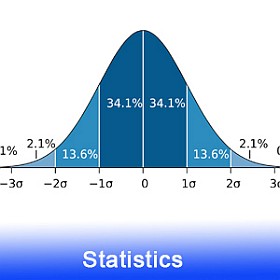
Where it gets more interesting is in the norm-referencing. Your raw score is compared against a reference group, and you receive a percentile rank. If you score in the 75th percentile, that means you performed better than 75 percent of the comparison population. Top-tier performance, the kind that gets attention from selective employers, generally lands in the 90th to 99th percentile range. Candidates scoring below the 30th percentile are often screened out of high-demand roles automatically.
Understanding percentile scoring matters because it reframes your preparation goal. You are not trying to answer every question correctly. You are trying to outperform the majority of other test-takers, many of whom will not have practiced at all.
The Practice Gap
Here is where preparation becomes critical. Research consistently shows that practice significantly improves performance on psychometric tests, and candidates who go in unprepared are at a measurable disadvantage. The gap between practiced and unpracticed candidates is one of the most consistent findings in psychometric research, with those who familiarize themselves with test formats and question types performing substantially better than those who do not.
Practice does not just improve familiarity. It builds the specific mental reflexes that timed assessments reward. When you have seen 50 abstract pattern sequences, the 51st takes less time to decode. Your brain learns to look for rotations before reflections, or to check the corners of a matrix before the center. These micro-strategies add up to real time savings across a full test.
The benefits of structured preparation extend beyond individual test performance. The National Center for Education Statistics, which compiles PISA data on global reasoning performance, shows similar patterns at the population level: exposure to structured problem-solving tasks correlates with higher cognitive performance outcomes. In short, the more you engage with logical challenges in a deliberate way, the sharper your reasoning becomes across contexts.
Strategies That Work
Effective preparation follows a few principles. First, identify the specific test format you will face. A diagrammatic reasoning test and an abstract reasoning test reward different micro-skills, and practicing the wrong format is a poor use of time.
Second, practice under timed conditions. Untimed practice builds understanding but does not build speed. Since speed under pressure is half the assessment, you need to simulate real conditions.
Third, review your mistakes carefully. The biggest gains come not from the problems you solve correctly but from understanding why you got a problem wrong. Did you misidentify the pattern? Did you run out of time? Did you misread the question? Each error type has a different fix.
Fourth, build your baseline reasoning skills outside of test-specific practice. Puzzles, logic games, mathematical proofs, and even strategic board games all exercise the same cognitive muscles. The broader your reasoning practice, the more adaptable you become when facing unfamiliar problem types on test day.
Who Benefits Most
People with strong mathematical thinking tend to have a natural advantage on logical reasoning tests, but that advantage is not automatic. Mathematical thinkers are comfortable with abstraction and rule-based systems, which maps well onto these assessments. The risk is overconfidence. If you assume your quantitative background will carry you through without preparation, you may be caught off guard by spatial or verbal formats that test reasoning in ways you have not practiced.
The ideal approach combines natural aptitude with deliberate, format-specific practice. Mathematical thinkers who do this tend to score exceptionally well because they bring both raw ability and trained efficiency to the test.
Across Dallas, from the university campuses near Gold Standard Auctions to the tech corridors in the northern suburbs, employers in every sector are relying more heavily on these assessments as part of their candidate evaluation process.
What Comes Next for Cognitive Assessment
The direction of cognitive testing is toward more interactive, adaptive formats. Adaptive tests adjust difficulty based on your responses in real time, which means the test itself becomes more efficient at measuring your true ability level. Expect shorter tests that produce more precise scores, delivered through platforms that track not just your answers but your response patterns and timing.
For candidates, this means preparation needs to go beyond memorizing question types. Building genuine reasoning fluency, the kind that performs well regardless of question format or difficulty level, is the most durable investment you can make. Structured practice with a variety of logical and mathematical problems remains the best path to that fluency.
If you think in patterns, systems, and structures, logical reasoning tests are your chance to demonstrate that ability in a format that employers trust and value. Preparation turns a natural strength into a measurable competitive edge.
Related Calculators
In case you have any suggestion, or if you would like to report a broken solver/calculator, please do not hesitate to contact us .