
Mathematics is one of those subjects that students perceive as problematic when they are in school. In other cases, we err by not knowing, not noticing, or being stressed or pressured somehow. Observing these common mistakes and learning how not to do them is quite helpful, as it enhances one's abilities and confidence when dealing with mathematics.
If you know the areas where those mistakes are usually made and apply reasonable measures, your mathematics will improve, and the outcome will be better. You will certainly reduce over-reliance on sites like grademiners that help students achieve their academic goals.
Here, we will discuss some common errors that students make in mathematics and how you can avoid them in future mathematical problems to be smarter and perfect in your mathematical calculations.

Types of Errors that Mathematicians Make and How They Can Be Prevented
Depending on mathematics' simple or complex facets, every learner can be defeated in mathematics. Here, details of the common and major challenges faced when solving mathematics problems are highlighted as follows as a way of offering solutions to enable you to solve mathematics problems very well.
Misreading the Problem
Mistake: Slow reading or misunderstanding the question is considered one of the worst. As such, one may solve the wrong problem completely or even overlook some aspects of the problem.
Solution
- Read Carefully: Ensure that you read the problem carefully and try to understand it very well. Use bold or underlining to necessary data. Break down the question for quick understanding.
Mistake: Not reviewing work to catch and correct errors.
Solution
- Take Time to Review: Always allocate time to go back and review your answers.
- Check Calculations: Re-do calculations to verify your results.
Overlooking Units of Measurement
Break It Down: Break the problem into sub-problems and ensure you are clear on each before moving to the next.
Incorrect Order of Operations
Mistake: If the sequential application of processes (PEMDAS/BODMAS) is not followed, getting the correct answer is impossible.
Solution
- Remember PEMDAS/BODMAS: Numbers and Operations- Grouping symbols/Brackets and Parentheses, Exponents and Orders, Multiplication and Division, Addition and Subtraction. They are worked on from left to right. You cannot provide the correct answer if you overlook these basics. It is, therefore, essential to comprehend the basics before embarking on any question.
- Write Steps Down: Each step aids the correct sequence so you do not skip some steps or write in the wrong sequence.
Sign Errors
Mistake: Interchanging the signs, such as when subtracting, multiplying, or adding numbers that have negative signs.
Solution
- Double-Check Signs: Do not forget to cross the signs of the numbers that you are solving with.
- Practice with Negative Numbers: As the rules referring to negative numbers are complex, constant solving of the numeric and alphabetical problems can enhance memory by recalling the rules.
Errors in Simplifying Fractions
Mistake: Missing a step here or there when completing divisions: improperly simplifying the fractions or not simplifying them.
Solution
- Factor Completely: Be sure that when simplifying, you possibly handle every element of the numerator and the denominator.
- Cross-Check: Check your work by dividing your simplified fraction back to the first fraction to verify the answer.
Incorrectly Applying Formulas
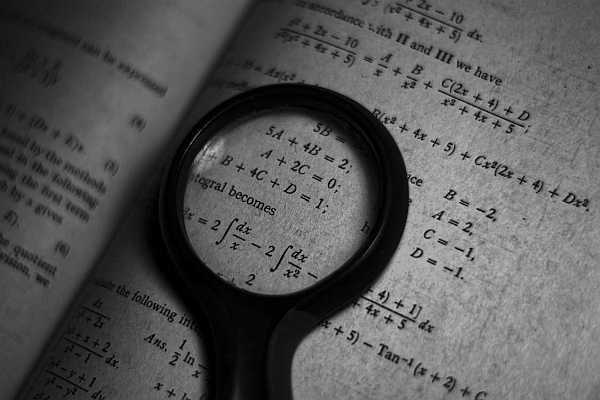
Mistake: Ineffectively applying the formulae or incorrect formulas to the problem.
Solution
- Understand the Formula: Remember not to memorize the formula but to know when it is applicable and how it is used.
- Write the formula First: First, record the formula to avoid making a mistake with numbers.
Decimal Point Errors
Mistake: The decimal point can be moved, thus leading to a change in the actual value of the number.
Solution
- Align Decimals: In addition to subtracting decimals, make sure that the decimal numerals are lined up in columns related to the decimal points.
- Use Estimation: Checking if the decimal point, if used, is in the right place can also be estimated from the result.
Misinterpreting Graphs and Charts
Mistake: It must be considered that if data is taken off graphs and charts, one might have a completely wrong perception of reality.
Solution
- Read Labels: Read the labels, titles, and legends on the graph or chart several times.
- Understand Scales: Before beginning to calculate, ensure that you understand the scale and units of measurement that have been used.
Failing to Check the Work
Mistake: Lack of attention to measures, such as choosing the right unit of measurement or failure to use the correct one.
Solution
- Keep Track of Units: Always put down the units of what you are doing at any point in the calculations.
- Convert Units Correctly: When doing unit conversion, ensure you correctly use the conversion between units to the nearest whole number.
Lack of Practice
Mistake: Inadequate practice means that some problems may be unknown to the student, or the student may look at them from a different perspective than how they are presented.
Solution
- Regular Practice: It is recommended that they engage in arithmetic exercises to keep testing and optimizing their proficiency.
- Seek Help: In case you have some difficulties solving certain types of problems, you should not hesitate to address them to teachers or tutors or consider sites that assist in handling math problems, like the best essay writing service. You will undoubtedly improve your performance in this subject if you take practice seriously.
Conclusion
Be able to inquire, learn, solve, compute, and reason. Math errors are not ideal, but they are not completely unavoidable. If one is aware of these common mistakes, then you can ensure that you do not make the same mistakes and boost your math grades.
As you can see, similar to writing, the main tenet for comprehending mathematics is the use of practice, concentration, and appropriate techniques. Accept these tips and solutions to meet your mathematical difficulties effectively and more accurately. With these hacks, you have what it takes to achieve your subject targets. Believe that math is not hard. It is doable. You can do it.
Related Calculators
 Strategies to Solve Math Problems - MathCracker.com
In case you have any suggestion, or if you would like to report a broken solver/calculator, please do not hesitate to contact us .