
Mathematics is often perceived as a daunting subject, especially when faced with complex problems that require critical thinking and problem-solving skills. Approximately 93% of adults report some level of math anxiety, with about 17% suffering from high levels. This anxiety can hinder problem-solving abilities and reduce confidence in tackling complex math problems.
However, approaching challenging math problems with confidence can significantly enhance one’s ability to tackle them effectively. Here are some key strategies to help you master complex math problems with ease and assurance.

1. Understand the Problem Thoroughly
The first step in solving any complex math problem is to read and understand it carefully. Break down the problem statement into smaller parts and identify what is being asked. If needed, rephrase the problem in your own words to ensure clarity. Understanding the question fully prevents misinterpretation and sets a strong foundation for developing an accurate solution.
2. Identify Known and Unknown Variables
Once you have understood the problem, list all the information given and identify the unknowns. Writing down what is known and what needs to be determined can help establish a structured approach to solving the problem. Utilizing resources such as online math help with AI can also assist in breaking down complex equations and identifying key variables efficiently. By organizing known and unknown values, you create a roadmap that simplifies the problem-solving process.
3. Choose the Right Strategy
Different math problems require different problem-solving strategies. Some common techniques include:
- Working Backwards: Useful for word problems or equations where the final answer is known. Start with the given answer and reverse the operations to reach the initial conditions.
- Breaking the Problem into Smaller Steps: Simplifying the problem into manageable parts can make it easier to solve. This technique is particularly helpful when dealing with multi-step equations or problems involving multiple variables.
- Using Visual Aids: Diagrams, graphs, or tables can provide a clearer understanding of the problem. A well-drawn diagram often reveals patterns and relationships that might not be immediately obvious from a textual description.
- Applying Formulas: Recognizing relevant mathematical formulas and applying them correctly is crucial for an accurate solution. Ensure that formulas are not just memorized but understood so they can be applied effectively in different scenarios.
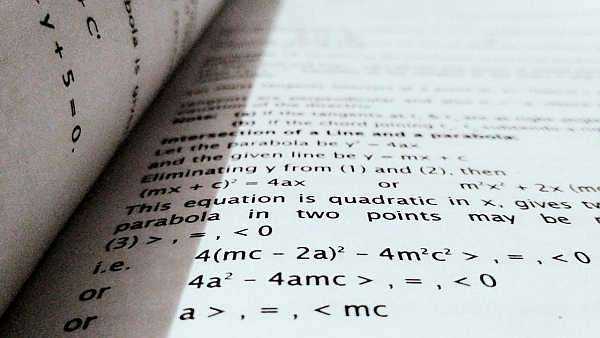
Photo by Deepak Gautam
4. Work Through the Problem Step-by-Step
Avoid rushing through complex problems. Work through each step logically and methodically, ensuring that calculations are accurate. Writing down each step helps in identifying errors and allows for a clear thought process. If you make a mistake, retrace your steps to pinpoint the error and correct it instead of starting over completely. Step-by-step reasoning also improves clarity when reviewing solutions. Additionally, using a stats calculator can help verify numerical data and provide accurate calculations, especially for statistical problems.
5. Check Your Work
Once a solution is obtained, always verify the accuracy of the answer. Plugging the solution back into the original equation or re-evaluating each step can help identify any miscalculations or mistakes. Sometimes, alternative methods of solving a problem can serve as a confirmation of your answer’s accuracy. Double-checking results builds reliability in your mathematical approach.
6. Stay Positive and Persistent
Complex math problems can sometimes be frustrating. However, maintaining a positive mindset and persevering through challenges will build confidence and improve problem-solving skills over time. Frustration is natural but should be used as motivation to find different ways to approach a problem. Resilience and persistence are key traits of successful problem solvers. Problem-solving skills acquired through math education significantly influence learning outcomes, contributing to 72.83% of students' academic success. This highlights the critical role of developing strong problem-solving abilities in mathematics.
7. Practice Regularly
Confidence in math comes from consistent practice. Engage in solving various types of problems to enhance understanding and adaptability. The more problems you solve, the more comfortable you become with tackling complex math questions. Practicing regularly also helps in recognizing patterns and developing a more intuitive grasp of mathematical concepts. Visualizing data using a pie chart maker can also assist in understanding proportions and comparisons more effectively, making abstract concepts more tangible.
8. Seek Help When Needed
If a problem seems too difficult, don’t hesitate to seek help. Discussing with peers, consulting a teacher, or using online resources can provide new perspectives and insights into solving the problem. Sometimes, a fresh explanation or a different approach can make a challenging problem much more understandable. Learning from others fosters growth and expands one’s mathematical knowledge.
Conclusion
Complex math problems may seem intimidating, but with a structured approach, patience, and consistent practice, they can be tackled with confidence. By developing a strong problem-solving mindset and applying effective strategies, anyone can improve their mathematical abilities and face challenges head-on.
Related Calculators
 Strategies to Solve Math Problems - MathCracker.com
In case you have any suggestion, or if you would like to report a broken solver/calculator, please do not hesitate to contact us .