
(See Steps) Using only definition: A sequence, t, converges to the real number s provided that for each r > 0 there exists a real number N such that for
Question: Using only definition: A sequence, t, converges to the real number s provided that for each r > 0 there exists a real number N such that for all n an element of N, n>N implies that the absolute value of |t-s| < r. If t converges, then s is called the limit of the sequence t. If a sequence does not converge to a real number it is said to diverge.
Prove the following:
- For any real number k>0, the limit as n approaches infinity, of 1/n^k = 0
- \(\underset{n\to \infty }{\mathop{\lim }}\,\frac{3n+1}{n+2}=3\)
- \(\underset{n\to \infty }{\mathop{\lim }}\,\frac{\sin n}{n}=0\)
- \(\underset{n\to \infty }{\mathop{\lim }}\,\frac{n+2}{{{n}^{2}}-3}=0\)
Deliverable: Word Document 
 [Step-by-Step] Show this diverges:
 (See Steps) Prove: If s_n converges to s, then |s_n| converges
 (See Solution) Suppose n→ ∞ lim s_n = 0. If t_n is a
![[See Solution] Show by an example that](/images/solutions/MC-solution-library-51868.jpg "[See Solution] Show by an example that the boundedness of t_n") [See Solution] Show by an example that the boundedness of t_n
[See Solution] Show by an example that the boundedness of t_n
![[Solution Library] Suppose that a_n,b_n,c_n are sequences](/images/solutions/MC-solution-library-51869.jpg "[Solution Library] Suppose that a_n,b_n,c_n are sequences such that a_n≤") [Solution Library] Suppose that a_n,b_n,c_n are sequences such that a_n≤
[Solution Library] Suppose that a_n,b_n,c_n are sequences such that a_n≤
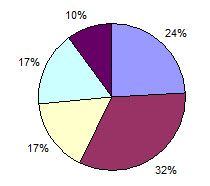 Check out this complete Pie Chart Maker - MathCracker.com