
(See Solution) Use the Lagrange multiplier method to find the extrema of f subject to the given constraints: f(x, y, z)=x-y+z, x^2+y^2+z^2=2 ; f(x, y)=x-y, x^2-y^2=2
Question: Use the Lagrange multiplier method to find the extrema of \(f\) subject to the given constraints:
- \(f(x, y, z)=x-y+z, \quad x^{2}+y^{2}+z^{2}=2 ;\)
- \(f(x, y)=x-y, \quad x^{2}-y^{2}=2 ;\)
- \(f(x, y, z)=x+y+z, \quad x^{2}-y^{2}=1,2 x+z=1\).
Deliverable: Word Document 
 (See Steps) Let f(x, y)=x^2+y^2+x y on the unit disk D=(x, y)
 (Solution Library) Find the shortest distance from the origin
![[Solution] Consider the quadratic form Q(x, y,](/images/solutions/MC-solution-library-72163.jpg "[Solution] Consider the quadratic form Q(x, y, z)=3 x^2+8 x z+2") [Solution] Consider the quadratic form Q(x, y, z)=3 x^2+8 x z+2
[Solution] Consider the quadratic form Q(x, y, z)=3 x^2+8 x z+2
 (Step-by-Step) Suppose that
 (Solution Library) Find the least squares straight line fit to the
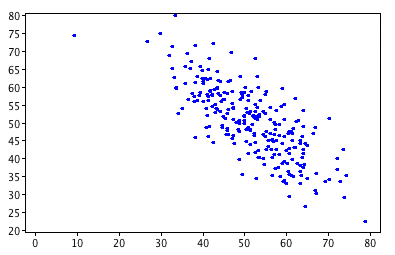 Spearman Correlation Calculator - MathCracker.com