
(See Steps) Are today’s college students studying hard or hardly studying? A recent story in the Boston Globe (July 4, 2010) asserts that over the last
Question: Are today’s college students studying hard or hardly studying?
A recent story in the Boston Globe (July 4, 2010) asserts that over the last five decades, the number of hours that the average college student studies has been steadily dropping. The article claims that in 1961, college students invested an average of 24 hours per week into their academic pursuits, whereas today’s students study an average of 14 hours per week.
A college administrator wonders if the trend indicated in the article is reflective of the students at her university. She enlists a graduate student to conduct a quick study of their student body. The grad student randomly selects 35 students from the student body and spends the next several days tracking down and interviewing these students. The number of hours these students report spending on studying and academic pursuits is given in the
Excel file called Hours_Studied spr14.xls. Download the data from BlazeView and use it to complete these exercises. The administrator would like to know if the mean hours studied for students from her university differs from the national mean of 14 hours reported in the Globe article. The appropriate hypotheses are
\[\begin{aligned} & {{H}_{0}}:\mu =14 \\ & {{H}_{A}}:\mu \ne 14 \\ \end{aligned}\]- Using computer software, create a histogram of the data. Show your computer-generated graph in your solutions. Would you say the data appears to be approximately normally distributed? (You may also create a probability plot, call a Q-Q plot in StatCrunch, to help answer this question.)
- Use computer software to conduct a one-sample t-test. Show the computer output in your solutions.
- At the 5% significance level, what is the conclusion to the hypothesis test?
- Use software to calculate a 95% confidence interval for the mean. Show your computer output. What is the interval?
Deliverable: Word Document 
![[See Steps] We are going to explore](/images/solutions/MC-solution-library-73879.jpg "[See Steps] We are going to explore the price of regular, unleaded") [See Steps] We are going to explore the price of regular, unleaded
[See Steps] We are going to explore the price of regular, unleaded
 (See Solution) We are interested in estimating the mean price
 (See Solution) An investor pay a premium of 10 cents per bushel
![[All Steps] An investor sells a corn](/images/solutions/MC-solution-library-73882.jpg "[All Steps] An investor sells a corn CALL option with a strike") [All Steps] An investor sells a corn CALL option with a strike
[All Steps] An investor sells a corn CALL option with a strike
![[Steps Shown] You get the following price](/images/solutions/MC-solution-library-73883.jpg "[Steps Shown] You get the following price information on options") [Steps Shown] You get the following price information on options
[Steps Shown] You get the following price information on options
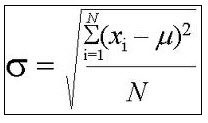 Descriptive Statistics Calculator of Grouped Data - MathCracker.com