
[See Steps] Suppose that a researcher conducts a political survey. She makes 1000 random phone calls and asks whether the recipients are in favor of the healthcare
Question: Suppose that a researcher conducts a political survey. She makes 1000 random phone calls and asks whether the recipients are in favor of the healthcare bill that is being discussed at the Senate currently. Let \(X_{i}\) be 1 if the \(i\) -th recipient of the call is in favor of the bill and 0 otherwise. Then, she sets up the null hypothesis and the alternative hypothesis as
\[\begin{array}{rlr} H_{0} & : & \mathbf{E} X_{1}=1 / 2 \\ H_{1} & : & \mathbf{E} X_{1} \neq 1 / 2 \end{array}\]Hence the null hypothesis is that about the half of the population is in favor of the bill. Suppose that the researcher finds that \((n=1000)\)
\[\bar{X}_{n}=\frac{1}{n} \sum_{i=1}^{n} X_{i}=0.74\]and the standard deviation \(\left(=\sqrt{\frac{1}{n} \sum_{i=1}^{n}\left(X_{i}-\bar{X}_{n}\right)^{2}}\right)\) is equal to 0.55.
- Construct a test statistic using the sample mean of \(X_{i}\).
- Find a critical value that gives Type I error of the test approximately 0.05 when the sample size is large.
- See if the researcher would reject the null hypothesis at \(5 \%\) significance level based on the test defined through (a) and (b).
- Compute the \(p\) -value using the test statistic and its asymptotic distribution. Would the researcher reject the null hypothesis at \(1 \%\) ?
Deliverable: Word Document 
![[Solution] Suppose that Y_i denotes the stock](/images/solutions/MC-solution-library-49422.jpg "[Solution] Suppose that Y_i denotes the stock returns for the i -th") [Solution] Suppose that Y_i denotes the stock returns for the i -th
[Solution] Suppose that Y_i denotes the stock returns for the i -th
![[Solution Library] Microwave Repair Costs A microwave](/images/solutions/MC-solution-library-49423.jpg "[Solution Library] Microwave Repair Costs A microwave oven repairer says") [Solution Library] Microwave Repair Costs A microwave oven repairer says
[Solution Library] Microwave Repair Costs A microwave oven repairer says
![[Solution] Gas Mileage A car company says](/images/solutions/MC-solution-library-49424.jpg "[Solution] Gas Mileage A car company says that the mean gas mileage") [Solution] Gas Mileage A car company says that the mean gas mileage
[Solution] Gas Mileage A car company says that the mean gas mileage
![[See Solution] Do You Eat Breakfast? A](/images/solutions/MC-solution-library-49425.jpg "[See Solution] Do You Eat Breakfast? A medical researcher estimates") [See Solution] Do You Eat Breakfast? A medical researcher estimates
[See Solution] Do You Eat Breakfast? A medical researcher estimates
 (Step-by-Step) Do Free Samples Work? You interview a random sample
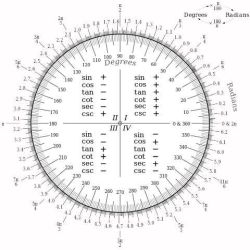 Radians To Degrees - MathCracker.com