
[See Steps] Show that v_1=(c-1 , 1 , 0), v_2=(c-5 , 1 , 2), and v_3=(c1 , 1 , 2) are eigenvectors of the matrix
Question: Show that \(\mathbf{v}_{1}=\left(\begin{array}{c}-1 \\ 1 \\ 0\end{array}\right), \mathbf{v}_{2}=\left(\begin{array}{c}-5 \\ 1 \\ 2\end{array}\right)\), and \(\mathbf{v}_{3}=\left(\begin{array}{c}1 \\ 1 \\ 2\end{array}\right)\) are eigenvectors of the matrix
\[A=\left(\begin{array}{ccc} -5+i & -17+13 i & 11-4 i \\ 1+i & 13-11 i & -7+8 i \\ 2+2 i & 2+2 i & -2+4 i \end{array}\right)\]and find the corresponding eigenvalues. For each \(\mu \in \mathbb{C}\), show that \(\mathrm{v}_{1}, \mathrm{v}_{2}\), and \(\mathrm{v}_{3}\) are eigenvectors of the matrix \(A-\mu I_{3}\) and find the corresponding eigenvalues. If \(T: \mathbb{C}^{3} \rightarrow \mathbb{C}^{3}\) is the linear transformation \(T(\mathbf{z})=A \mathbf{z}\left(\right.\) for \(\left.\mathbf{z} \in \mathbb{C}^{3}\right)\), find the matrix of \(T\) with respect to the basis \(\mathscr{B}=\left(\mathbf{v}_{1}, \mathbf{v}_{2}, \mathbf{v}_{3}\right)\)
Find the matrix of \((T-(1+i) I)(T+4 I)^{-1}\) with respect to the basis \(\mathscr{B}\).
Deliverable: Word Document 
![[Step-by-Step] Let f: R^3 \rightarrow R be](/images/solutions/MC-solution-library-72396.jpg "[Step-by-Step] Let f: R^3 \rightarrow R be differentiable. Making") [Step-by-Step] Let f: R^3 \rightarrow R be differentiable. Making
[Step-by-Step] Let f: R^3 \rightarrow R be differentiable. Making
![[All Steps] Let F: R^2 \rightarrow R^4](/images/solutions/MC-solution-library-72397.jpg "[All Steps] Let F: R^2 \rightarrow R^4 be the function given by") [All Steps] Let F: R^2 \rightarrow R^4 be the function given by
[All Steps] Let F: R^2 \rightarrow R^4 be the function given by
 (See Solution) Consider the functions f: R^2 \rightarrow R^2 and
 (Step-by-Step) In each of the following, determine whether or
 (See Steps) Suppose that V is a real inner product space, with
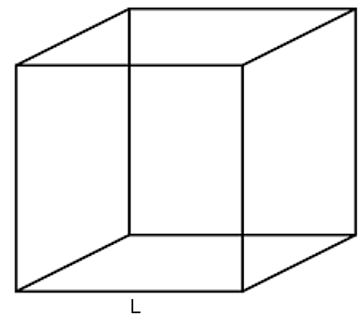 Area and Volume of a Cube - MathCracker.com