
(Steps Shown) Fix α with
Question: Fix \(\alpha\) with \(0<\alpha<1\) and repeat our "middle thirds" construction for the Cantor set except that now, at the \(n\) th stage, each of the \(2^{n-1}\) open intervals we discard from $[0,1]$ is to have length \((1-\alpha) 3^{-n}\). (We still want to remove each open interval from the "middle" of a closed interval in the current level - it is important that the closed intervals that remain turn out to be nested.) The limit of this process, a set that we ul name \(\Delta_{\alpha}\). is called a generalized Cantor set and is very much like the ordinary Cantor set. Note that \(\Delta_{\alpha}\) is uncountable, compact, nowhere dense, and so on, but has nonzero outer measure. Indeed, check that \(m^{*}\left(\Delta_{a}\right)=\alpha\). (See Chapter Two for an example.) [Hint: You only need upper estimates for \(m^{*}\left(\Delta_{\alpha}\right)\) and \(\left.m^{*}\left(\Delta_{a}^{c}\right) .\right]\)
Deliverable: Word Document 
![(See Solution) If f ∈ \mathcalR[a, b]](/images/solutions/MC-solution-library-38413.jpg "(See Solution) If f ∈ \mathcalR[a, b] and f=g a.e., does") (See Solution) If f ∈ \mathcalR[a, b] and f=g a.e., does
(See Solution) If f ∈ \mathcalR[a, b] and f=g a.e., does
 (Steps Shown) Solve each of the following trigonometric equations.
![[Solution] When a light ray passes through](/images/solutions/MC-solution-library-38415.jpg "[Solution] When a light ray passes through a triangular prism") [Solution] When a light ray passes through a triangular prism
[Solution] When a light ray passes through a triangular prism
 (Solved) In fluid mechanics, it is shown that the force required
 (See Steps) Find the smallest value of t (in seconds) which yields
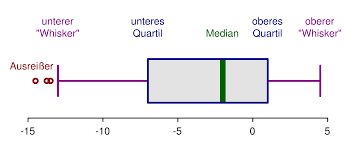 Coefficient of Variation Calculator - MathCracker.com