
[See Solution] A researcher hypothesizes that individuals who listen to classical music will score differently from the general population on a test of
Question: A researcher hypothesizes that individuals who listen to classical music will score differently from the general population on a test of spatial ability. On a standardized test of spatial ability, \(\mu=58\). A random sample of 14 individuals who listen to classical music is given the same test. Their scores on the test are 52,59,63,65,58,55, 62,63,53,59,57,61,60,59
- Is this a one- or two-tailed test?
- What are \(H_{0}\) and \(H_{a}\) for this study?
- Compute \(t_{obt}\)
- What is \(t_{cv} ?\)
- Should \(H_{0}\) be rejected? What should the researcher conclude?
- Determine the \(95 \%\) confidence interval for the population mean, based on the sample. mean.
Deliverable: Word Document 
![[Solved] A researcher believes that the percentage](/images/solutions/MC-solution-library-73312.jpg "[Solved] A researcher believes that the percentage of people who") [Solved] A researcher believes that the percentage of people who
[Solved] A researcher believes that the percentage of people who
 Solution: Researchers at a food company are interested in how
![[See Solution] What are degrees of freedom?](/images/solutions/MC-solution-library-73314.jpg "[See Solution] What are degrees of freedom? How are the") [See Solution] What are degrees of freedom? How are the
[See Solution] What are degrees of freedom? How are the
![[Solved] What do inferential statistics allow you](/images/solutions/MC-solution-library-73315.jpg "[Solved] What do inferential statistics allow you to") [Solved] What do inferential statistics allow you to
[Solved] What do inferential statistics allow you to
 (Steps Shown) What is the General Linear Model (GLM)? Why does
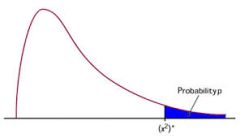 Chi-Square Test for Goodness of Fit - MathCracker.com