
(Steps Shown) (a) In M_22, the real vector space of 2 * 2 matrices with real entries, find the coordinate vector of A= (ll1 2 , 3 4) with respect to the
Question: (a) In \(M_{22}\), the real vector space of \(2 \times 2\) matrices with real entries, find the coordinate vector of \(A=\) \(\left(\begin{array}{ll}1 & 2 \\ 3 & 4\end{array}\right)\) with respect to the basis
\(\mathscr{M}=\left(\left(\begin{array}{ll}1 & 0 \\ 0 & 0\end{array}\right),\left(\begin{array}{ll}1 & 1 \\ 0 & 0\end{array}\right),\left(\begin{array}{ll}1 & 1 \\ 1 & 0\end{array}\right)\left(\begin{array}{ll}1 & 1 \\ 1 & 1\end{array}\right)\right)\)
(b) Find the coordinate vector of \(p(x)=2-x+3 x^{2}\) with respect to the basis \(\mathscr{B}=\left(1,1+x, x^{2}-1\right)\) of \(P_{2}\), the real vector space of polynomials in \(x\) with real coefficients and degree at most 2 .
(c) Find the coordinate vector of \(p(x)=2-x+3 x^{2}\) with respect to the basis \(\mathscr{C}=\left(1+x, 1-x, x^{2}\right)\) of \(P_{2}\), the real vector space of polynomials in \(x\) with real coefficients and degree at most 2 .
(d) For the bases \(\mathscr{B}\) and \(\mathscr{C}\) in parts (b) and (c), find the transition matrix \(P_{\mathscr{E} \rightarrow \mathscr{B}}\) so that
\[[p(x)]_{\mathscr{B}}=P_{\mathscr{E} \rightarrow \mathscr{B}}[p(x)]_{\mathscr{E}}, \quad \text { for all } p(x) \in P_{2}\]
Deliverable: Word Document 
![[Solution] (a) Use de l'Hôpital's rule to](/images/solutions/MC-solution-library-72184.jpg "[Solution] (a) Use de l'Hôpital's rule to calculate lim _x \rightarrow") [Solution] (a) Use de l'Hôpital's rule to calculate lim _x \rightarrow
[Solution] (a) Use de l'Hôpital's rule to calculate lim _x \rightarrow
![[Solution Library] Use the definition to calculate](/images/solutions/MC-solution-library-72185.jpg "[Solution Library] Use the definition to calculate the directional") [Solution Library] Use the definition to calculate the directional
[Solution Library] Use the definition to calculate the directional
![[Step-by-Step] Use the definition of directional derivative](/images/solutions/MC-solution-library-72186.jpg "[Step-by-Step] Use the definition of directional derivative to show") [Step-by-Step] Use the definition of directional derivative to show
[Step-by-Step] Use the definition of directional derivative to show
 (Solution Library) The so-called Vanderwaals equation relates
 (Steps Shown) Rewrite the n -th order linear differential equation
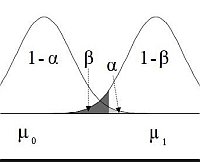 Power Calculator - Testing for One Mean - MathCracker.com