
Solution: Let A ∈ M_n(R). Suppose that λ is a real eigenvalue of A and that A x=λ x, x ∈ C^n, x ≠q 0 . Let x=u+i v, in which
Question: Let \(A \in M_{n}(\mathbf{R})\). Suppose that \(\lambda\) is a real eigenvalue of \(A\) and that \(A x=\lambda x, x \in\) \(\mathbf{C}^{n}, x \neq 0 .\) Let \(x=u+i v\), in which \(u, v \in \mathbf{R}^{n}\) are the respective real and imaginary parts of $x ;$ see \((0.2 .5) .\) Show that \(A u=\lambda u\) and \(A v=\lambda v .\) Explain why at least one of $u, v$ must be nonzero, and conclude that \(A\) has a real eigenvector associated with \(\lambda\). Must both \(u\) and \(v\) be eigenvectors of A ? Can \(A\) have a real eigenvector associated with an eigenvalue that is not real?
Deliverable: Word Document 
 (See Solution) Let D ∈ M_n be a diagonal matrix. Compute
![[Step-by-Step] Let A, B ∈ M_n .](/images/solutions/MC-solution-library-75522.jpg "[Step-by-Step] Let A, B ∈ M_n . Suppose that A and B are") [Step-by-Step] Let A, B ∈ M_n . Suppose that A and B are
[Step-by-Step] Let A, B ∈ M_n . Suppose that A and B are
![[All Steps] If A ∈ M_n, S](/images/solutions/MC-solution-library-75523.jpg "[All Steps] If A ∈ M_n, S A S^-1=\Lambda=diag;(λ_1,") [All Steps] If A ∈ M_n, S A S^-1=\Lambda=diag;(λ_1,
[All Steps] If A ∈ M_n, S A S^-1=\Lambda=diag;(λ_1,
 (Steps Shown) A matrix A ∈ M_n is a square root of B ∈
 (Solution Library) Find the solution of the following Cauchy problems:
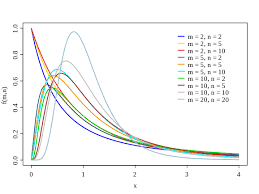 F-test for the Equality of Two Population Variances - MathCracker.com