
(Solution Library) When interest is compounded continuously, the amount of money increases at a rate proportional to the amount S present at time t, that is, d S
Question: When interest is compounded continuously, the amount of money increases at a rate proportional to the amount \(S\) present at time \(t\), that is, \(d S / d t=r S\), where \(r\) is the annual rate of interest.
- Find the amount of money accrued at the end of 5 years when $5000 is deposited in a savings account drawing \(5 \frac{3}{4} \%\) annual interest compounded continuously.
- In how many years will the initial sum deposited have doubled?
- Use a calculator to compare the amount obtained in part (a) with the amount \(S=5000\left(1+\frac{1}{4}(0.0575)\right)^{5(4)}\) that is accrued when interest is compounded quarterly.
Deliverable: Word Document 
 (All Steps) Memorization When forgetfulness is taken into account,
![[Solution Library] The number N(t) of people](/images/solutions/MC-solution-library-60257.jpg "[Solution Library] The number N(t) of people in a community who are") [Solution Library] The number N(t) of people in a community who are
[Solution Library] The number N(t) of people in a community who are
![[Step-by-Step] Three large tanks contain brine, as](/images/solutions/MC-solution-library-60258.jpg "[Step-by-Step] Three large tanks contain brine, as shown in Figure") [Step-by-Step] Three large tanks contain brine, as shown in Figure
[Step-by-Step] Three large tanks contain brine, as shown in Figure
![[Solution Library] (a) Verify that y_p_1=3 e^2](/images/solutions/MC-solution-library-60259.jpg "[Solution Library] (a) Verify that y_p_1=3 e^2 x and y_p_2=x^2+3") [Solution Library] (a) Verify that y_p_1=3 e^2 x and y_p_2=x^2+3
[Solution Library] (a) Verify that y_p_1=3 e^2 x and y_p_2=x^2+3
 (See Steps) The indicated function y_1(x) is a solution of the
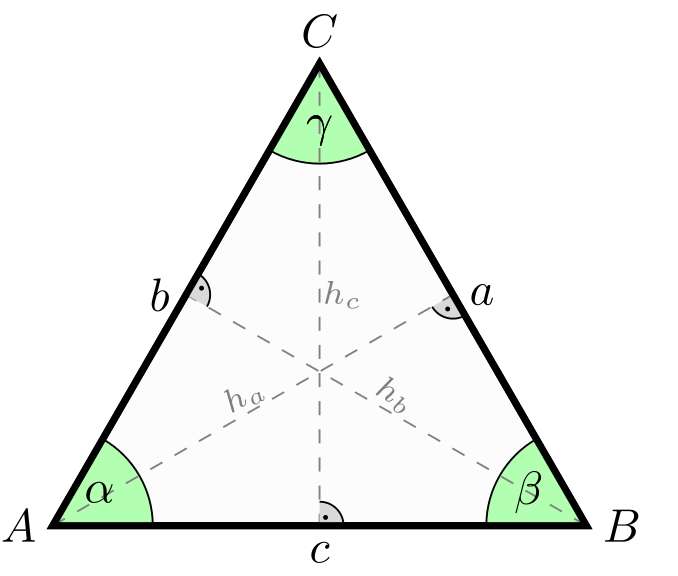 Triangle Calculator with two angles and one opposite side - MathCracker.com