
[See Solution] In 2003, the General Social Survey found that 24% of Americans were willing to pay much higher taxes in order to protect the environment.
Question: In 2003, the General Social Survey found that 24% of Americans were willing to pay much higher taxes in order to protect the environment. Suppose a similar study will be conducted in 2008 and researchers would like to test whether the proportion in 2008 is the same as in 2003. A difference of 10% would be regarded as practically important.
Let p denote the proportion of Americans willing to pay much higher taxes in order to protect the environment.
- Find the sample size needed to design a test of p = 0.24 versus p \(\ne \) 0.24 at the 1% significance level so that there is an 85% chance of rejecting the null hypothesis if the true population proportion is 0.34 (10% higher than 24%).
- Find the sample size needed to design a test of p = 0.24 versus p \(\ne \) 0.24 at the 1% significance level so that there is an 85% chance of rejecting the null hypothesis if the true population proportion is 0.14 (10% lower than 24%).
- What sample size should the researchers use so that there is at least an 85% chance of rejecting the null hypothesis if the true proportion in 2008 is 34% and if the true proportion is 14% in 2008?
Deliverable: Word Document 
![[Steps Shown] Consider a resource-allocation problem having](/images/solutions/MC-solution-library-49453.jpg "[Steps Shown] Consider a resource-allocation problem having the") [Steps Shown] Consider a resource-allocation problem having the
[Steps Shown] Consider a resource-allocation problem having the
 (Steps Shown) David, LaDeana, and Lydia are the sole partners
![[Solved] What’s the major problem with your](/images/solutions/MC-solution-library-49455.jpg "[Solved] What’s the major problem with your") [Solved] What’s the major problem with your
[Solved] What’s the major problem with your
![[See Solution] Do more redheads fail math](/images/solutions/MC-solution-library-49456.jpg "[See Solution] Do more redheads fail math than students with other hair") [See Solution] Do more redheads fail math than students with other hair
[See Solution] Do more redheads fail math than students with other hair
![[Solution Library] You’re wondering if the distribution](/images/solutions/MC-solution-library-49457.jpg "[Solution Library] You’re wondering if the distribution of grades") [Solution Library] You’re wondering if the distribution of grades
[Solution Library] You’re wondering if the distribution of grades
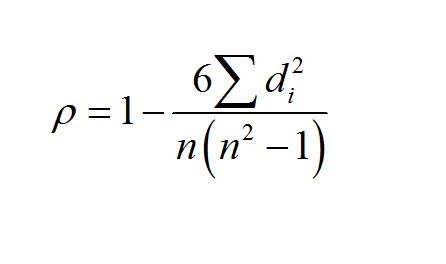 Spearman's Critical Correlation Calculator - MathCracker.com