
(All Steps) Game Theory (Stag-Hunt Game): N players go hunting; each can choose to hunt either stag or hare, so the set of actions available to each player
Question: Game Theory (Stag-Hunt Game):
N players go hunting; each can choose to hunt either stag or hare, so the set of actions available to each player is {S, H} (S stands for "hunt stag", H stands for "hunt hare"). If all N players hunt S, then each gets payoff 2. If any players hunt hare, then each hare-hunter gets payoff 1, while all stag-hunters get zero. (Interpretation, the stag is only caught if all N players work together).
- Suppose first that N = 2 (i.e., that there are two players). Write out the payoff matrix.
- Now let N = 3: Show that it is not a Nash equilibrium for 2 players to choose S, and one player to choose H: specifically, show that if this is what players plan to do, and if all players correctly anticipate it, then somebody can improve his payoff by changing only his own action.
Deliverable: Word Document 
 Solution: Crucial Steps in HRD The various steps and concerns of
![[See Solution] Assume that the demand and](/images/solutions/MC-solution-library-72816.jpg "[See Solution] Assume that the demand and supply functions of") [See Solution] Assume that the demand and supply functions of
[See Solution] Assume that the demand and supply functions of
 (Steps Shown) Suppose there are 50 consumers of a public good.
![[Solution Library] In the numerical example in](/images/solutions/MC-solution-library-72818.jpg "[Solution Library] In the numerical example in the class, the") [Solution Library] In the numerical example in the class, the
[Solution Library] In the numerical example in the class, the
![[See Steps] Assume the same demand conditions](/images/solutions/MC-solution-library-72819.jpg "[See Steps] Assume the same demand conditions as question 3 , but") [See Steps] Assume the same demand conditions as question 3 , but
[See Steps] Assume the same demand conditions as question 3 , but
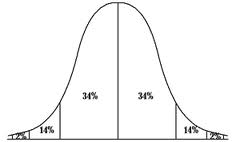 Z-test for One Population Proportion - MathCracker.com