
[See Steps] The following table is obtained Experiment 1 Experiment 2 Group 1 Group 2 Group 3 Group 1 Group 2 Group 3 5 0 1 1 5 4 0 0 10 2 3 4 3 10 8 2
Question: The following table is obtained
| Experiment 1 | Experiment 2 |
| Group 1 | Group 2 | Group 3 | Group 1 | Group 2 | Group 3 | ||
| 5 | 0 | 1 | 1 | 5 | 4 | ||
| 0 | 0 | 10 | 2 | 3 | 4 | ||
| 3 | 10 | 8 | 2 | 4 | 5 | ||
| 0 | 1 | 3 | 3 | 5 | 7 | ||
| 2 | 9 | 3 | 2 | 3 | 5 | ||
| Mean (Xbar) | 2 | 4 | 5 | 2 | 4 | 5 |
-
By inspection, in which case would you guess that the difference among groups is more likely to be
statistically significant. Why? - Carry out the analysis of variance for Experiment 1. Are the results significant at the .05 level?
- Why did you retain (or reject) Ho in part (b) above?
- Carry out the analysis of variance for Experiment 2. Are the results significant at the .05 level?
- Why did you retain (or reject) Ho in part (d) above?
- Calculate the effect sizes, or eta squared, for both Experiment 1 and 2.
- Why do the F ratio and eta squared statistics differ dramatically for the two experiments even
though the sample means (i.e., 2,5,4) are the same for both?
Deliverable: Word Document 
 (Solution Library) A teacher observes that in a random sample of
 (Step-by-Step) A bond issue is to be put before the voters in a
 Solution: For University C, use the values computed in #1 (for
![[See Solution] A population is normally distributed](/images/solutions/MC-solution-library-62552.jpg "[See Solution] A population is normally distributed with a mean") [See Solution] A population is normally distributed with a mean
[See Solution] A population is normally distributed with a mean
![[Step-by-Step] The following problems deal with the](/images/solutions/MC-solution-library-62553.jpg "[Step-by-Step] The following problems deal with the SAT (Scholastic") [Step-by-Step] The following problems deal with the SAT (Scholastic
[Step-by-Step] The following problems deal with the SAT (Scholastic
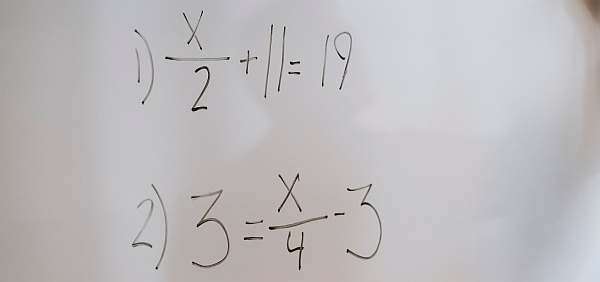 Solve For x Calculator - MathCracker.com