
[Steps Shown] In each of the following, a subset V of R^3 is given. V=(cx+y z , x+z , y) such that x_i y_1 z arbitrary constant Is it closed under addition? Is
Question: In each of the following, a subset \(V\) of \(R^{3}\) is given.
-
\(V=\left\{\left(\begin{array}{c}x+y z \\ x+z \\ y\end{array}\right)\right.\) such that \(x_{i} y_{1} z\) arbitrary constant \(\}\)
Is it closed under addition?
Is it closed under scalar multiplication?
Is it a vector subspace of \(R^{3}\) ? -
\(V=\left\{\left(\begin{array}{c}x+y z \\ x+z \\ 1\end{array}\right)\right.\) such that \(x, y_{i} z\) arbitrary constant \(\}\) Is closed under addition Is closed under scalar multiplication Is a vector subspace of \(R^{3}\)
Is it closed under addition?
Is it closed under scalar multiplication?
Is it a vector subspace of \(R^{3}\) ? -
\(V=\left\{\left(\begin{array}{l}x \\ y \\ z\end{array}\right)\right.\) such that $x, y, z$ positive integer \(\}\)
Is it closed under addition?
Is it closed under scalar multiplication?
Is it a vector subspace of \(R^{3}\) ? - \(V=\left\{\left(\begin{array}{l}x \\ y \\ z\end{array}\right)\right.\) such that \(\left.x y \leq 0\right\}\)
Is it closed under addition?
Is it closed under scalar multiplication?
Is it a vector subspace of \(R^{3}\) ?
Deliverable: Word Document 
![[See Solution] Determine whether the following sets](/images/solutions/MC-solution-library-75590.jpg "[See Solution] Determine whether the following sets of vectors") [See Solution] Determine whether the following sets of vectors
[See Solution] Determine whether the following sets of vectors
![[Solution Library] In R^3 let U_1=(1,3,4), U_2=(4,0,1),](/images/solutions/MC-solution-library-75591.jpg "[Solution Library] In R^3 let U_1=(1,3,4), U_2=(4,0,1), U_3=(3,1,2).") [Solution Library] In R^3 let U_1=(1,3,4), U_2=(4,0,1), U_3=(3,1,2).
[Solution Library] In R^3 let U_1=(1,3,4), U_2=(4,0,1), U_3=(3,1,2).
 (See Steps) It is said that financial policy (by itself) does
![[See Steps] Steinberg Corporation and Dietrich Corporation](/images/solutions/MC-solution-library-75593.jpg "[See Steps] Steinberg Corporation and Dietrich Corporation are identical") [See Steps] Steinberg Corporation and Dietrich Corporation are identical
[See Steps] Steinberg Corporation and Dietrich Corporation are identical
![[See Steps] The unhedged value of Make-or-Break](/images/solutions/MC-solution-library-75594.jpg "[See Steps] The unhedged value of Make-or-Break Co. is $4,000") [See Steps] The unhedged value of Make-or-Break Co. is $4,000
[See Steps] The unhedged value of Make-or-Break Co. is $4,000
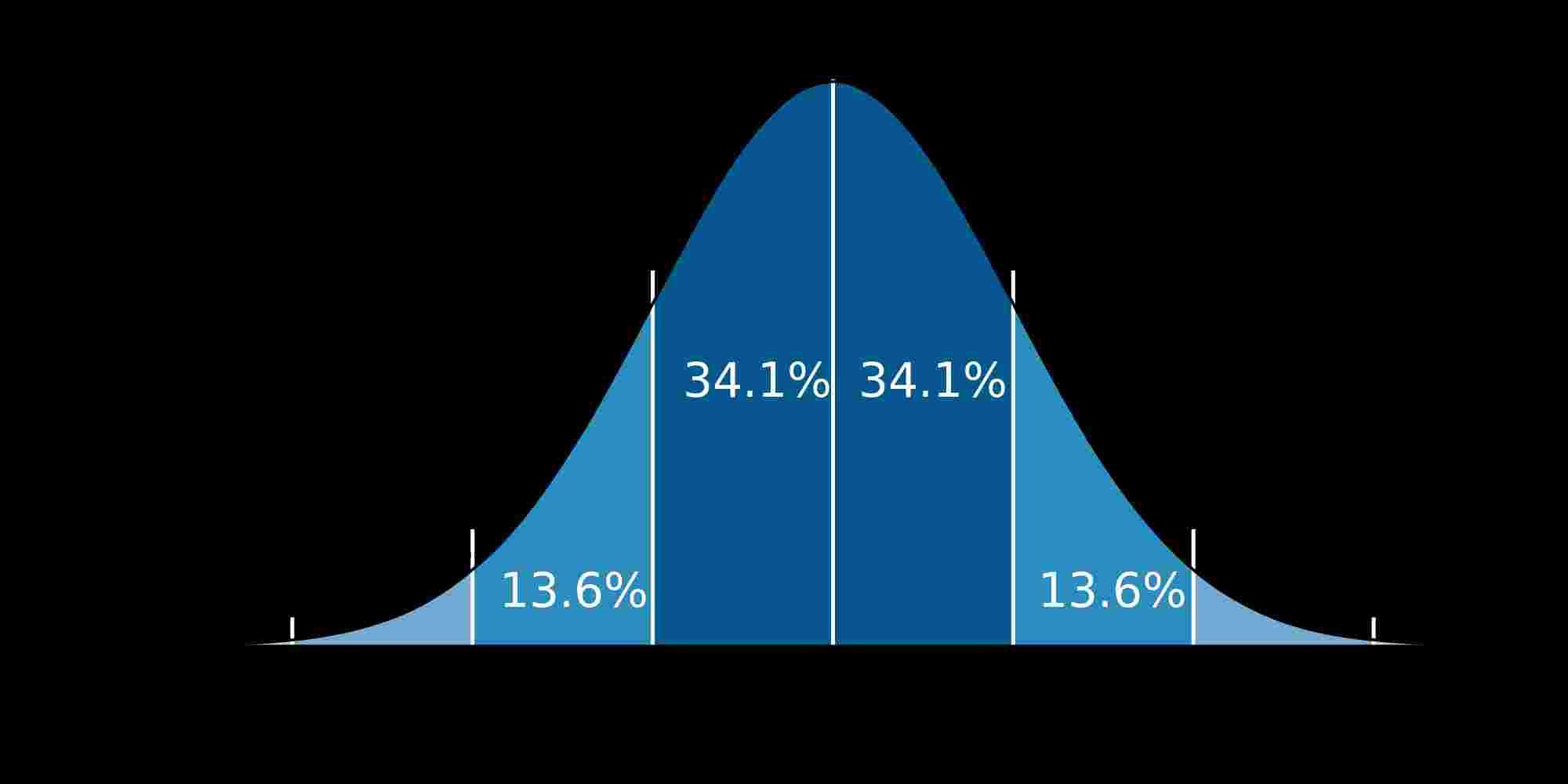 Decile Calculator - MathCracker.com