
[See] The data for a random sample of six paired observations are shown in the table. Pair Sample 1 Sample 2 1 7 4 2 3 1 3 9 7 4 6 2 5 4 4 6 8 7 Calculate
Question: The data for a random sample of six paired observations are shown in the table.
| Pair | Sample 1 | Sample 2 |
| 1 | 7 | 4 |
| 2 | 3 | 1 |
| 3 | 9 | 7 |
| 4 | 6 | 2 |
| 5 | 4 | 4 |
| 6 | 8 | 7 |
- Calculate the difference between each pair of observations by subtracting observation 2 from observation 1. Use the differences to calculate \(\bar{d}\) and \(s_{\mathrm{d}}^{2}\)
- If \(\mu_{1}\) and \(\mu_{2}\) are the means of populations 1 and 2 , respectively, express \(\mu_{\mathrm{d}}\) in terms of \(\mu_{1}\) and \(\mu_{2}\).
- Form a \(95 \%\) confidence interval for \(\mu_{\mathrm{D}}\).
- Test the null hypothesis \(H_{0}: \mu_{\mathrm{d}}=0\) against the alternative hypothesis \(H_{a}: \mu_{d} \neq 0 .\) Use \(\alpha=.05\).
Deliverable: Word Document 
 (Step-by-Step) General: Normal Curves What percentage of the area
 (All Steps) In problems 29-48 let z be a random variable with
![[All Steps] Assume that x has a](/images/solutions/MC-solution-library-37146.jpg "[All Steps] Assume that x has a normal distribution, with the") [All Steps] Assume that x has a normal distribution, with the
[All Steps] Assume that x has a normal distribution, with the
 (See) Assume that x has a normal distribution, with the specified
 (Solution Library) Find z such that 97.5% of the standard normal curve
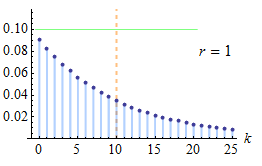 Geometric Probability Calculator - MathCracker.com